
A Compendium Of
Gaming Controllers
Since The Dawn Of The Home Gaming Industry

Video games have long enchanted audiences since their first real appearance in 1971 with Computer Space, and with Pong in 1972, which are widely recognized as the titles (and technology) that started it all.
Since then, the hold that video games have had over people around the world has grown exponentially, not only in popularity for at-home gaming, but also in terms of other forms of media like TV shows and films, and massive steps in innovation.

1996

2018
Many are familiar with cult classics that encompass a range of historic gaming platforms and popular media, like the Tomb Raider franchise that first appeared on the Sega Saturn in 1996, which has graced the silver screen in several iterations, and most recently Shadow of the Tomb Raider for PS4 in 2018.
2022
Or, in terms of new and innovative titles, the recent offerings of Elden Ring (2022) and Horizon: Forbidden West (2022) continue to sweep the gaming community, from games journalists and guide writers to fans and reviewers alike.

But whatever way you look at it, from the first arcade games to the latest smartphone offerings, the transition from clunky and substantial gaming consoles to compact and mobile technology has transformed virtually the entire world of entertainment.

As such, the methods of gaming now available are nearly endless and ever-evolving, with innovations coming yearly— with consoles, updates, and accessories becoming more and more ingenious and immersive.
Video games are essentially interactive, and how you can sink yourself into the world of the game differs. PCs, consoles, smartphones, and even virtual reality are all portals for diving into the wide variety of stories available to players.

And if you take even a very brief look at the history of all video game controllers from the Pong onwards, you can tell that it’s an incredible journey— just like many of the narratives, such platforms offer for you to experience.

So, let’s explore the world of gaming stuff and the evolution of video game controllers from the dawn of home gaming until this point, to better understand the saga that has brought joy and immersion to so many people around the globe.
Dominant Video Game
Companies


To begin our journey through the various iterations of video game controllers, it’s important to take a look at the corporate juggernauts of the gaming world that really pushed innovations through and launched the frenzy for these platforms from day one.
You have probably heard of the main companies behind video games these days, including Nintendo, Sony, and Microsoft, as the businesses that put out the Switch, PS4, and XBOX, respectively. But there are a couple more dominant video game companies that pioneered the earliest consoles and video game controllers.
So, let’s explore the top five gaming companies that began the entire craze and continue to promote it to this day, from Atari to Microsoft.

Atari
As the pioneer of the truly retro video game controllers, you might be familiar with the Atari gaming company as the maker of the first commercially successful arcade video game, Pong, in 1972.
But this company actually started in 1971 as Syzygy Engineering, formed by Nolan Bushnell and Ted Dabney. Their first game, Computer Space, came out in the same year but did not receive as much commercial or public attention as they had wanted.
So, the business was rebranded as Atari in the following year and after the initial success of a tennis game released for the Magnavox Odyssey, they released an arcade version of it: Pong, the video game that changed the world and sparked the entire industry.
Continuing from the success of Pong, Atari began developing at-home gaming consoles that used joysticks and paddles to control gameplay. These included the Atari-Telegames Home Pong, the Atari Video Computer System, the Atari 800, the Atari 2600, and the Atari 5200.
However, due to how expensive these home consoles were, compatibility issues, and the small range of dedicated games for people to play, this equipment was not as initially successful as Atari would have hoped, particularly after the 1983 video game industry crash.
After several years of financial difficulty, the company was virtually all but disintegrated into various other video game holdings, including Namco Bandai and Hasbro Interactive. But it continues to stand as the origins of what we now know as the video gaming controller industry, and introduced retro video game controllers like the Atari 2600 joystick.
Nintendo
We recognize Nintendo as the producer of the Pokemon and Zelda game franchises, but did you know that Nintendo’s worldwide history actually started back in 1889? Originally founded as Nintendo Koppai, a man named Fusajiro Yamauchi began making Japanese playing cards called “hanafuda”, or “flower cards” during September of that year.
That means Nintendo has been around for over 130 years and has experienced massive popularity ever since creating the company’s first international console in 1977, called the Color TV-Game, and even more so after the release of the classic game Donkey Kong in 1981.

Nintendo moved away from playing cards and board games during the late 1970s, first with the Japanese-only electronic video recording, or EVR, video gaming system, in collaboration with Mitsubishi.
1977
1980s
Following this success, Nintendo began manufacturing worldwide home video game controllers and systems with the TV-Game 15 and 6 consoles in 1977. But their real video game success started in the 1980s, when Nintendo released Donkey Kong, the Famicom and VS. System consoles, and expanded to international sales in the millions.

1989
1989 heralded the first Game Boy system in Japan, as the original handheld video game controller, later released in North America and Europe, and the world has not looked back ever since. In fact, Game Boy is certainly the genesis point for popular consoles in the future, including the N64, Gamecube, Wii, and Switch systems.

1990
Next came the Super Nintendo Entertainment System (SNES) during 1990 that saw incredible sales numbers, also thanks to the wide love of various Nintendo franchises already appearing among home gamers. This includes the release of Super Mario World, SimCity, Mortal Kombat, and more.
And while there were future iterations of Nintendo controllers, like the Game Boy Advance and Nintendo DS, the latest offerings by the company such as the Nintendo Switch and Switch Lite are by far the most influential in recent years.
sega

Beginning as a coin-operated gaming company in 1940, Sega is another original entry to the history of electronic gaming companies. And after the release of their first successful arcade game called Periscope in 1966, the company doubled down on the production of gaming systems and controllers.

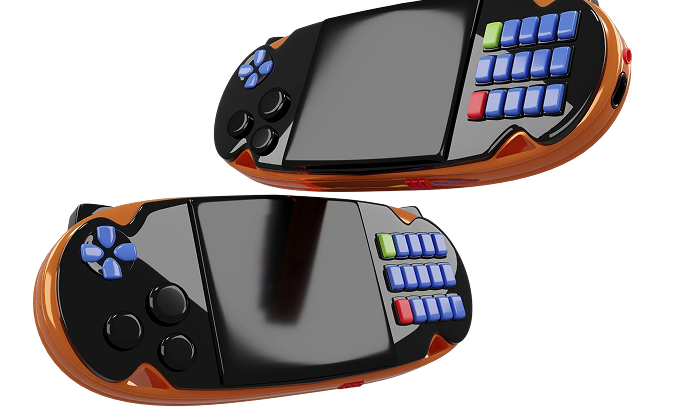
And this was certainly a wise decision, as their first consoles for at-home use, called the SG-1000 and the Master System, were fairly successful, though their biggest competitor was Nintendo.
1991
2000s
However, with the creation of the Sega Genesis system and controller, and Sonic the Hedgehog in 1991, Sega had finally begun their own empire of gaming stuff and consoles that rivaled Nintendo.
1994
1999
From here, the arcade aspect of Sega continued to flourish, with racing games, side scrollers, and more. The Sega Saturn and Dreamcast, in 1994 and 1999, respectively, marked the next era of this company’s prowess, but when financial losses began in the early 2000s, the company was forced to reshuffle its assets.
Now, Sega has a smaller hold on the gaming industry but still has success with games like the Yakuza and Persona franchises, as well as the film series for Sonic the Hedgehog.
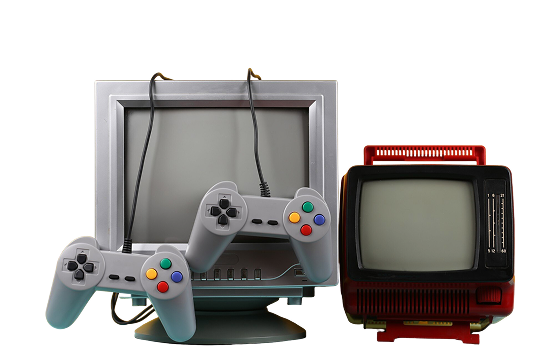
But one of the biggest impacts that Sega has had on gaming and the evolution of video game controllers was the structure introduced by the Genesis and Dreamcast systems.
Not only were both technologically advanced, but the Dreamcast also had advanced multiplayer support and was the very first controller to include a DLC— something that many people can’t imagine being without these days, and which revolutionized the world of gaming.
Sony
As we arrive at another monolith in the gaming world, it’s hard to separate the world of gaming from the corporation of Sony Interactive Entertainment, the home of PlayStation consoles.
1994
The first wired PlayStation system arrived in 1994, and it was a new type of 32-bit console that nearly immediately rocketed Sony to international acclaim.
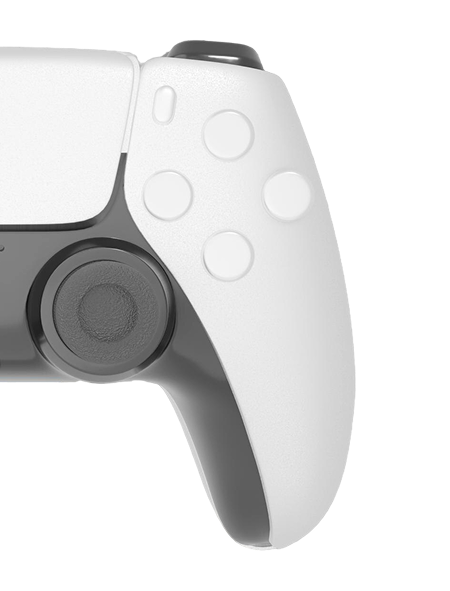
Some of the reasons for this imminent popularity included an easier style to be held in gamers’ hands, much better graphics, and significantly more buttons than other competing controllers as a gamepad. Because of this, and the later release of fan-favorite games like Crash Bandicoot and Final Fantasy, gamers kept sales going.

2000s
After the PlayStation 2 and PlayStation 3 launched in the early and mid-2000s, respectively, the competition between Sega, Nintendo, and PlayStation continued to be fierce. For example, the PlayStation 2 outsold the Sega Dreamcast, but the Microsoft XBOX 360 outdid the PlayStation 3.
But as the latest releases of the PS4 and PS5 have subsequently proved, PlayStation has carved out a place for itself as the best gaming controller option that Sony provides.
Microsoft
Lastly, but certainly not least, Microsoft’s foray into the wide world of gaming. One of the most fascinating parts of the role that Microsoft has in video games is the influence within both PC gaming and the consoles or controllers, both of which have lasted until today.
But before Microsoft branched into home-gaming consoles in the early 2000s, the computer company monolith already had a Games Group that produced content for PC gamers, including classic titles like Microsoft Flight Simulator in 1982.

This was especially influential, given the company’s creation of Microsoft personal computers, operating systems, and other accessories that completely revolutionized the idea of technology within the home. Other games like Age of Empires were able to bring even more gamers into the fold, and promote PCs further.
And when it came to exclusive gaming consoles, the first XBOX was released in 2001 under the new division of Microsoft Games as a competitor to the incredibly successful PlayStation 1.
2005
However, it was with the XBOX 360 in 2005 that Microsoft pioneered yet another innovation in the world of technology and home gaming, as a console that supported wireless technology for the controller connection.
From here, Microsoft introduced XBOX Live and XBOX 1 in order to take the multiplayer experience to the next level, and later the XBOX One.

Structure And Design
Changes

Now that we have a basic understanding of the history of most dominant video gaming companies and how they created an ever-evolving series of controllers, it’s worth taking a quick look at the structural and design changes implemented.
As with many other technological advances, games controllers have had to go through trial and error that led their manufacturers to either experience losses or gains in capital.
And, by keeping an eye on what the consumer wants and how changes could be implemented, controllers have gone from a joystick to DualShock bumper action or even virtual reality sensors.


Such changes can be seen stemming not only from the physiology of gamers and the way controllers fit into their hands, but also the ease with which controllers manipulate the minute actions of gameplay, particularly in careful actions like aiming and shooting.
So, let’s consider the main structural and design changes from retro video game controllers to the ones of the modern era.
1970s
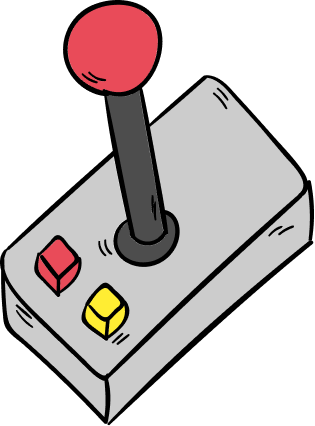
During this time, directional control was mastered with a joystick that could guide movement in 8 different directions. And while this was effective, it was also quite cumbersome and difficult for fine motor reactions, but Atari still remained the top competitor for such joystick directional gameplay.
Additionally, you could find simple trigger buttons with “pistol-grips” for shooting games, and the fairly short-lived directional disk or rollerball that controlled movement with your thumb.
And as controllers branched into more button-based controls, the industry saw the addition of number pads (such as Intellivision) or pause buttons that quickly turned into more adaptive press-point manipulations.
1980s
1990
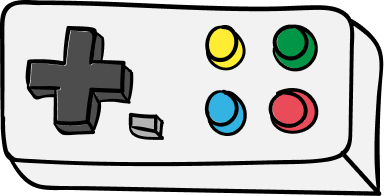
The emergence of shoulder buttons and thumbsticks during the 1980s and 1990sheralded the journey towards more modern and comfortable controllers, with forms that were made specifically for the gamers’ hands.
Additionally, having buttons to pause and start the game emerged, as well as a cross-directional arrow gamepad (or D-pad) that would change everything.
1980s
1990
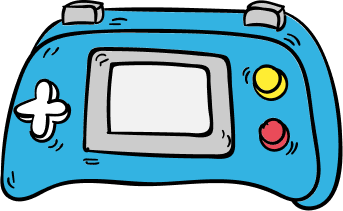
As technology started leaning towards being wireless, gamers sought out longer cords to extend viewing space away from the TV screen, and manufacturers responded accordingly. Controllers at this time also incorporated better D-pad functions that were kept simple, such as with the XBOX and PlayStation.
Plus, as the PlayStation controllers came out, gamers started to see multiple buttons with the classic labels of a circle, cross, triangle, and square to differentiate each function, and other companies took note— including Microsoft’s response with A, B, X, and Y labels.
1980s
1990
Finally, battery-powered controllers were introduced during the wireless and motion-activated era of gaming technology. This included automatic connections, motion sensors for hand and arm movement, and corresponding actions within the video gameplay.
For example, this was the era of the Nintendo Wii, PlayStation Move, and Microsoft Kinect, as each of the remaining major gaming companies shot for public popularity when it came to this new and exciting ability for remote characters and gameplay control.
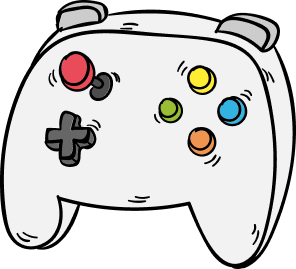
Video Game Controller
Timeline

Now we arrive at the actual compendium of the most popular and influential video game controllers in the timeline of at-home gaming. As such, let’s discuss a brief overview of each gaming system’s controller, its appearance, and how the technology worked.
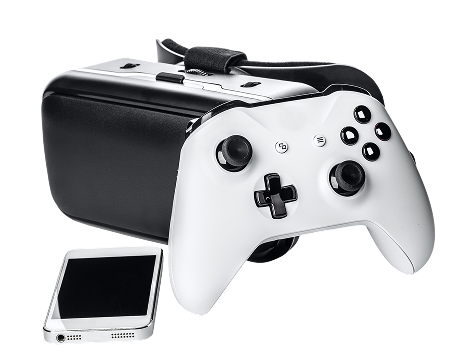
2020: XBOX Series X
The most recent installment in Microsoft’s gaming line, the XBOX Series X was released with hardware enhancements, better graphic resolutions, and high-speed download processors.
In terms of the video game controller itself, the XBOX Series X retains much of the previous model’s features, but was reshaped to be compatible with more hand sizes in the gamer community. There are also several new function buttons to make the multi-media connection and game sharing easier.
Where this console does differ greatly, however, is in the shape and size of the unit. While the controller is not incredibly different from previous iterations, many gamers note the change to a rectangular console that is quite hefty.
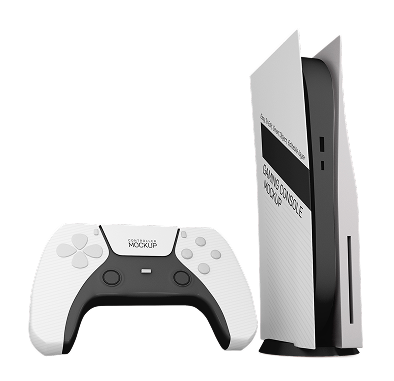
2020: PlayStation 5 DualSense
As Sony’s latest PlayStation offering, the PS5 was highly anticipated and hard to get your hands on. However, it also features a variety of new features and enhanced gameplay options that make it worth the wait in many gamers’ opinions.
High-speed gameplay and data processing, better resolution capacities, and smoother updates are all included in the PlayStation 5 console itself, as well as the controllers’ haptic feedback for more immersion and increased adaptive triggers for easier aiming, shooting, and viewing on-screen.
The console unit and controller are both larger than the PS4 model, but the DualShock controllers still fit comfortably in the hand and feature enhanced gamepad functions, as well.
Conclusion
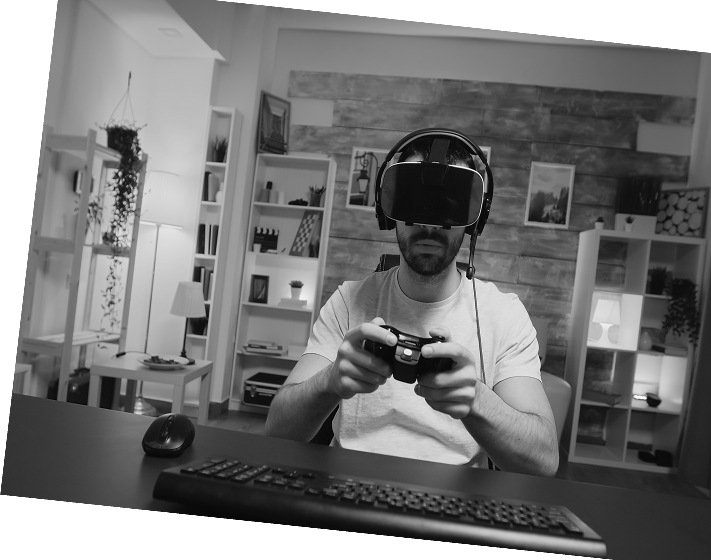
In all, video game controllers are essential to the experience, and have been since day one. And it’s truly incredible to view the evolution of the gaming controller from simple 8-say joysticks to ergonomic handhelds with vibration motors for an immersive effect.
As such, the entire home gaming industry has relied on the advancements and relationship between controllers and consoles to continue getting better, more comfortable, and remain affordable.
And while it might seem preposterous that we once relied on a small thumbwheel to move gameplay instead of state-of-the-art thumbsticks that are weighted for precise on-screen action, it’s an incredible exploration to look into the history of how gaming has gotten to where it is today.