
Building your own home theater space can be one of the most exciting and rewarding home improvement projects you ever undertake. But how do you get started planning out your home theater dimensions and figuring out how to configure the room? Not only is it worth considering the spacing between seating rows, but you’ll also want to think about the distance from the screen and the walls. We’ve compiled some information to take into consideration when planning your space and deciding how many home theater seats you need, including answers to what is the best home theater seating distance from the screen and between rows. This will ensure that you get the most out of your new entertainment space.
Home Theater Room Size Considerations: How Much Room Do You Need for Home Theater Seating?
The first thing to consider when looking at your home theater room size is how many people you want to accommodate. The larger the gatherings you’re planning, the more space you’ll need. However, many people look to convert an existing room into a theater, which means that it might need to work the other way around: The number of people you can host may depend on your home theater’s size. Choose a room that’s at least 15 feet wide and 20 feet long and you should have a good basis to start building your home theater. You may be a bit cramped if you opt to go smaller than this minimum home theater room size. Don’t forget to include space for things like your home theater equipment and optional pieces of furniture like a concession stand, bar, or tables.
How Far Should You Sit From the Screen?
Your screen size will have the biggest effect on the comfortable seating distance from the screen. According to the Society of Motion Pictures and Television Engineers, or SMPTE, your home theater layout should give each seat a view of the entire screen that’s within a 30-degree field of view, so you’ll need to do a bit of math to calculate the theater seating dimensions that will keep everyone comfortable. Viewers sitting too close may experience discomfort and eyestrain, while seats set too far away lose the benefits of HD and widescreen resolution.
The following suggestions are designed to give you a basic idea of dimensions for your design. If you want more precise measurements, we recommend that you reference Carlton Bale’s home theater calculator.
Doing the Math
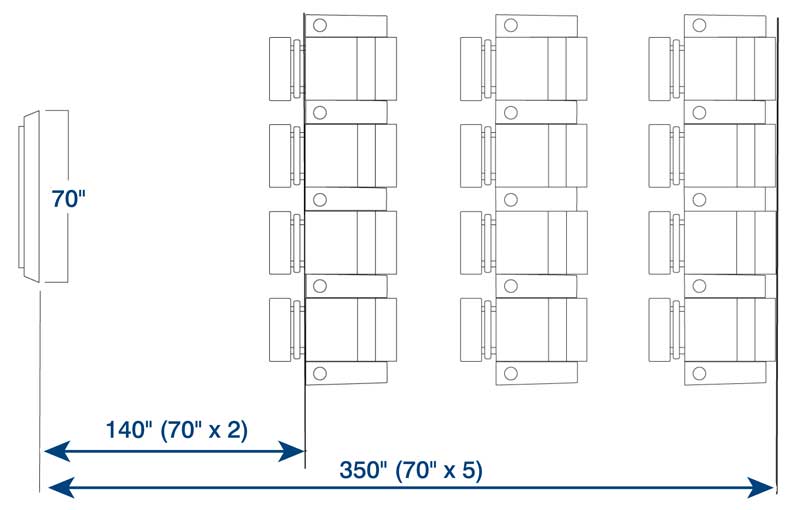
For the easiest way to determine minimum and maximum distances from the screen, follow this simple formula: Take the horizontal width of your screen (NOT the diagonal width) and multiply it by 2 to get the minimum distance. Multiply by 5 to get the maximum distance.
For example, if your screen is 70 inches across, your first row of seats needs to be at least 140 inches, or 11 feet 8 inches, away from the screen.
Your last row of seats needs to be no farther than 350 inches, or 29 feet 2 inches, away from the screen.
Other factors, like the lighting in the room, the brightness of the screen, and the screen resolution, will also affect the home theater seating distance. For best results, be sure to test the view of each seat, especially if you plan to attach them to the floor.
Using Chair Width to Determine the Number of Chairs in Rows
The next step is to determine the number of theater recliners you can fit in each row. You’ll want to be sure that you leave enough space for people to get past and factor this into your home theater dimensions. We recommend that you leave at least 20 inches of space on either side of the row.
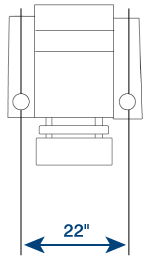
Home theater seats are measured from center to center, meaning from the center of one armrest to the center of the other. Multiply that amount by the number of chairs to see if they’ll fit.

For example, if your home theater seats are 22 inches wide, and your home theater space is 11 feet (132 inches) wide:
Subtract 40 inches from the room width (132 – 40 = 92 inches). This gives us enough space on either side of the row.
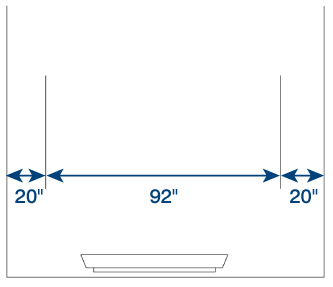
Divide this new number by the home theater chair width to get the number of seats (92 divided by 22 = 4.18, or four theater seats).
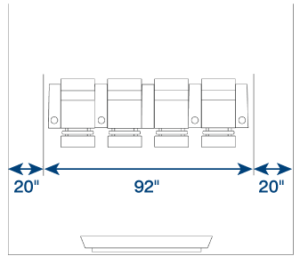
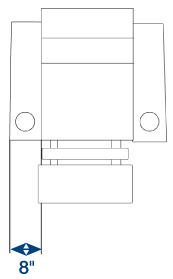
You will also need to factor the width of one armrest into your calculations. A good standard size is about 8 inches; check your seat’s manual for the right width.
Calculating the Space Between Rows of Seats
Determine the total depth of each theater seat.
Add 20 inches between each seat for the row space.
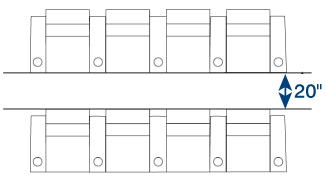
If your seats recline, determine the recline length of each set to make sure they do not overlap.
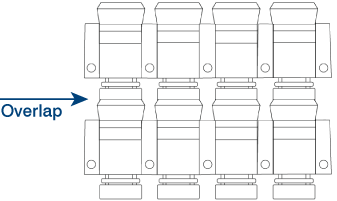
If they do overlap, increase the row space slightly until they no longer touch.
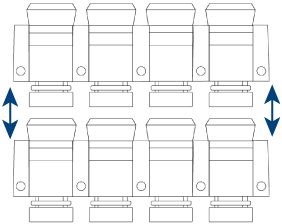
NOTE: If you need more room, you can decrease the space between rows. Just make sure that you do not make it less than 14 inches. This is the minimum space for comfortable access.by Carlton Bale.
If you need more room, you can decrease the space between rows. Just make sure that you do not make it less than 14 inches: This is the minimum space required for comfortable access.
How Tall Should a Riser Be in a Home Theater?
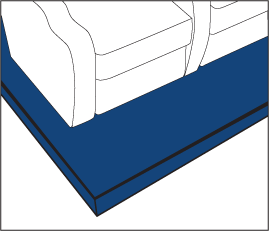
A good basic home theater riser height is 12 inches (1 foot) per row. If you have more than one row of theater seats, you should consider placing risers under the back rows, as an elevated back row for home theater seating gives every viewer a clear view of the screen and makes your home entertainment space more like a commercial theater.
Home Theater Seating Layouts by Number of Chairs in a Row
It’s a common question we hear all the time: What seating layout is going to deliver the most comfort and the best experience for your family? Let’s explore the options:
Row of 2
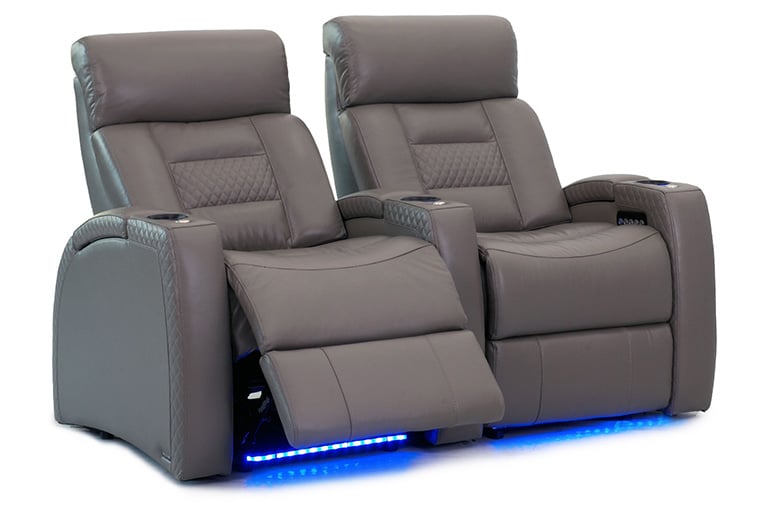
This is one of the most attractive layouts in home theaters today, and rows of two seats can be ordered in a range of variations to suit your needs. A straight row of two seats means the seats sit next to each other, connected by a straight arm. A loveseat is another popular option; this is a straight row of two seats that do not have an armrest placed between them. Finally, you can choose a row of two chairs with a curved armrest in between, which is called a curved row of two. The curved format provides a slightly different viewing angle but also does take up the most space.
Row of 2 Layouts
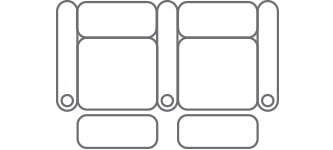
A. Row of 2 Straight
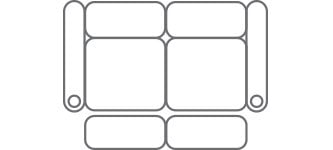
B. Row of 2 Loveseat
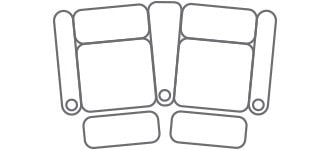
C. Row of 2 Curved
Row of 3
Rows of three seats are the most popular choice we see in home theaters today. Very often, our customers will purchase two rows of three seats for a total of six chairs.
Consider a row of three straight seats (image A), a row of three as a reclining sofa (image B) where there are no armrests between the middle seats, or a row of three chairs with a left loveseat (image C). We do also offer rows of three with a right loveseat in a straight configuration.
Curved rows of three seats are also shown below in similar variations except for the sofa option, which isn’t possible because there are no arms in between the seats to make the curve.
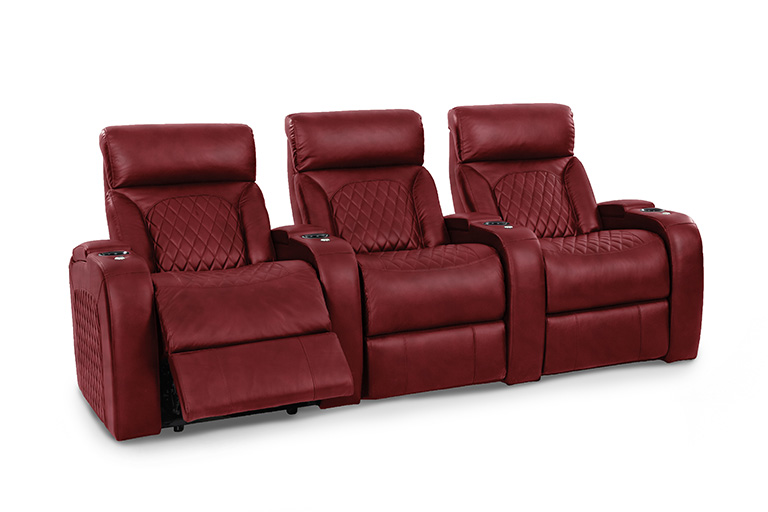
Straight Row of 3 Layouts
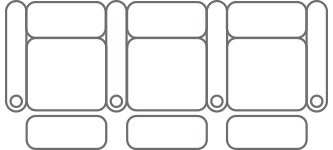
A. Row of 3
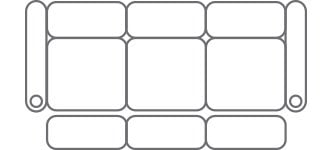
B. Row of 3 Sofa
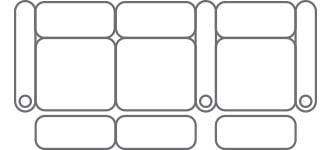
C. Row of 3 Left Loveseat
Curved Row of 3 Layouts
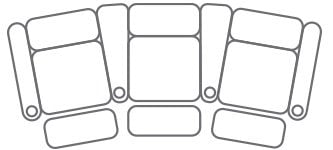
D. Row of 3
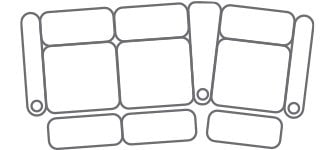
E. Row of 3 Left Loveseat
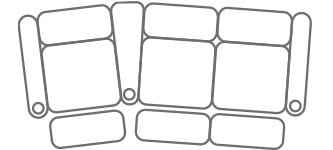
F. Row of 3 Right Loveseat
Row of 4
The straight row of four seats with a middle loveseat is a family favorite. The center chairs in this layout do not have an armrest between them. If you do want this type of arrangement but want to have an optional armrest, we have a solution for that, too: the Octane “shark” arm. This portable armrest slides in between the seats with a “fin” and can be removed and stored when not needed.
Standard layouts for this setup are two rows of four theater seats either in a straight or curved configuration. This is an excellent choice if you plan to entertain your friends and family in your home theater.
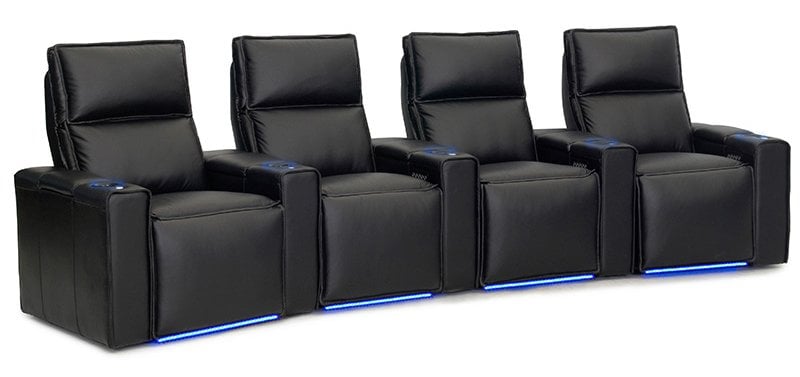
Straight Row of 4 Layouts
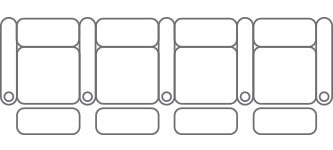
A. Row of 4
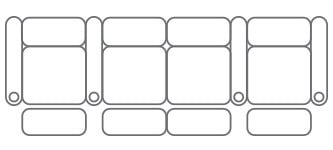
B. Row of 4 Center Loveseat
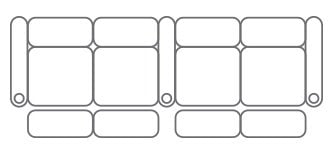
C. Row of 4 Dual Loveseats
Curved Row of 4 Layouts
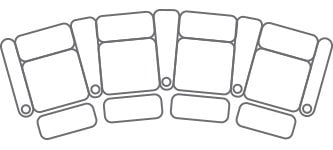
D. Row of 4
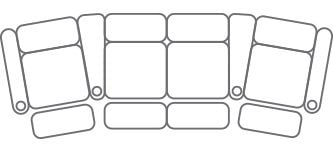
E. Row of 4 Center Loveseat
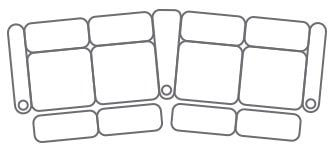
F. Row of 4 Dual Loveseats
Row of 5
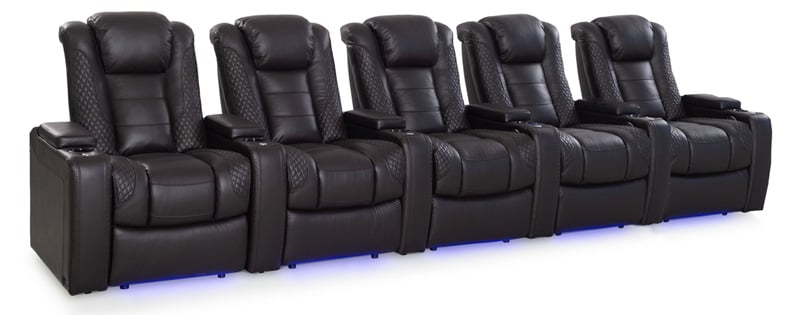
Rows of five theater seats can accommodate many variations, including loveseats placed on either end with a single position in the middle (image C), as well as straight individual reclining seats making a row of 5 (image A). Another popular option is a sofa as the middle three seats in a row of 5. Keep in mind that when you’re including a loveseat or sofa option in your furniture layout, you save significant amounts of space because you are removing armrests.
Straight Row of 5 Layouts
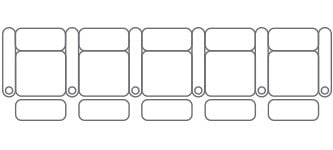
A. Row of 5
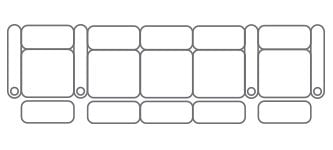
B. Row of 5 Center Sofa
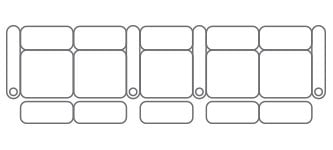
C. Row of 5 Dual Loveseats
Curved Row of 5 Layouts
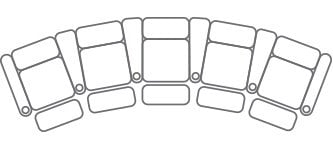
D. Row of 5
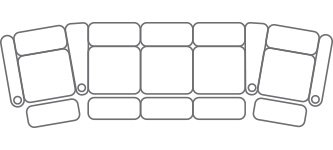
E. Row of 5 Center Sofa
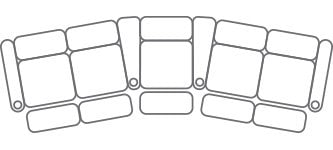
F. Row of 5 Dual Loveseats
Row of 6
Rows of six seats give you a large number of layout options. You can easily have three loveseats in a row (image C) or two single seats flanked by loveseats on either side (image B).

Straight Row of 6 Layouts
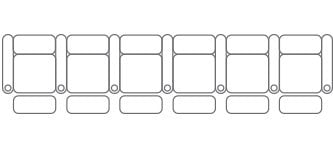
A. Row of 6
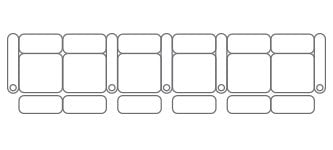
B. Row of 6 Dual Loveseats
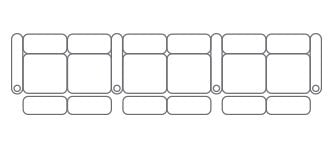
C. Row of 6 Triple Loveseats
Curved Row of 6 Layouts
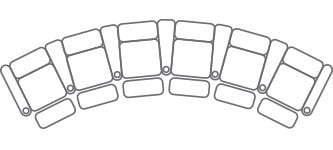
D. Row of 6
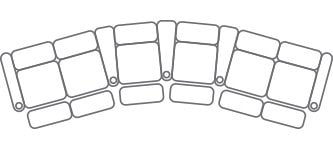
E. Row of 6 Dual Loveseats
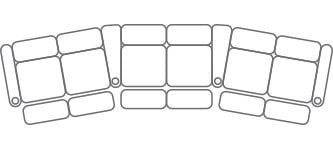
F. Row of 6 Triple Loveseats
Most Popular Two Row Room Layouts
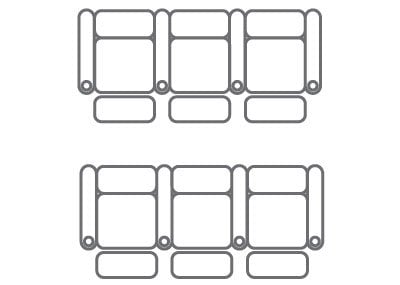
A. 2 Rows of 3
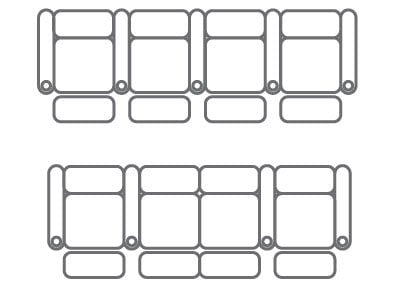
B. Row of 4 in Back, Row of 4 with Loveseat in Front
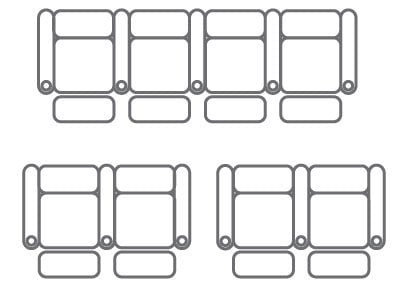
C. Row of 4 in Back, 2 Rows of 2 in Front
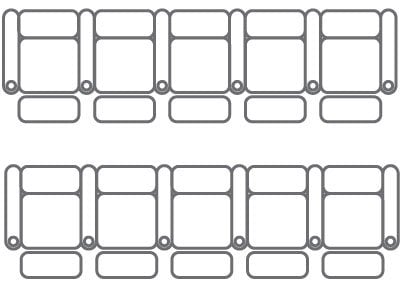
D. 2 Rows of 5
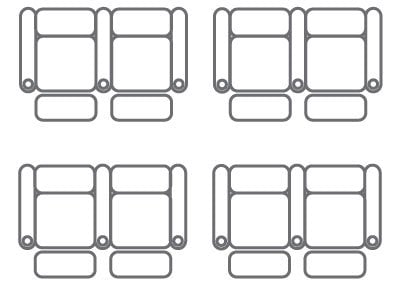
E. 2 Rows of Separate Rows of 2
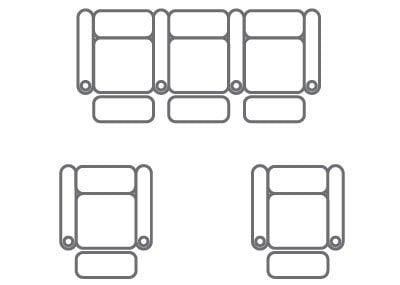
F. Row of 3, 2 Singles Front
Written by Bruce.