
Measuring
& Designing
The Perfect Home Theater
or Media Room Layout
Designing a home theater is very exciting but also requires a lot of thought.

Will you be installing a projector screen or using a TV?

How big will the screen need to be to ensure everyone in the room gets a piece of the action?

Will 1080p resolution be enough or will only 4K do?



What about speaker placement and space for walkways?
From getting your initial ideas on to paper to fine-tuning your home theater seating layout, this guide will answer all of these questions and more.

The drawing board:
initial layout planning
Your first task is to choose which room you are going to convert into a home theater. All things being equal, you should opt for the biggest room. If there is not much difference in the size, a basement or garage tends to be easier to work with as it will be easier to soundproof and control light levels.
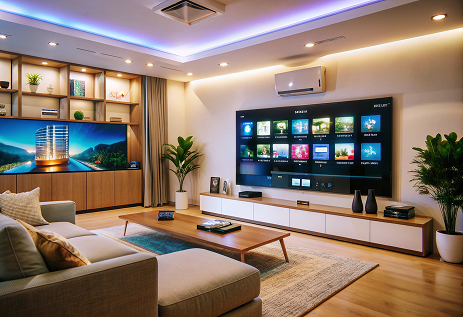
Outside In
For the purposes of this article, we are going to assume that you are designing your home theater from 'outside in'. This just means that you know the available dimensions of your home theater space and will be choosing your equipment and home theater seating to fit.
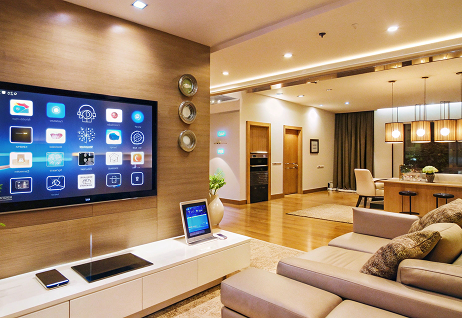
inside out
If you are completely unrestricted as to space, you could start with the ideal screen size and audio set up, create your perfect seating layout and then build your interior walls to fit. However, this 'inside out' design planning will only apply to a fortunate few.
For the rest of us, the size of the room available will have a profound effect on the choices we make. Although there is no definite point where a small room becomes a large room, 15 feet seems a reasonable dividing line. At these dimensions and larger, projection screens become more tenable, you can add more movie theater seats and you can place surround sound speakers further away from viewers. In short, the room starts to feel more like a home cinema than a large media room.
Although there is no definite point where a small room becomes a large room, 15 feet seems a reasonable dividing line.
What shape is best for a
home theater?
If you do have any flexibility with the shape of your home cinema, avoid a square room wherever possible. Due to the way sound travels, square rooms can generate standing waves leading to excessive amplification in some areas.
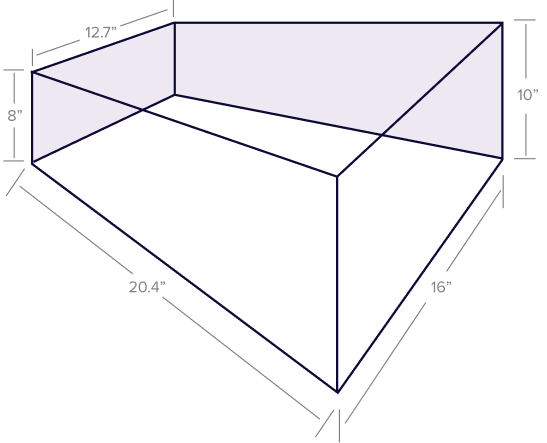
golden trapagon
The ideal shape for a movie theater is known as the ‘golden trapagon’. This is a rectangular room which is higher and wider at the screen end with dimensions following a specific ratio of 1.272:1.
For example, if the back of your theater measures 10 foot by 16 foot, the ideal front measurement will be 12.7 foot by 20.4 foot. This ratio is the square root of the golden ratio (1.618), a number which is found in nature and also in aesthetically pleasing classical human designs. The golden trapagon not only eliminates standing waves but also funnels sound to the viewers, creating an enhanced audio experience.
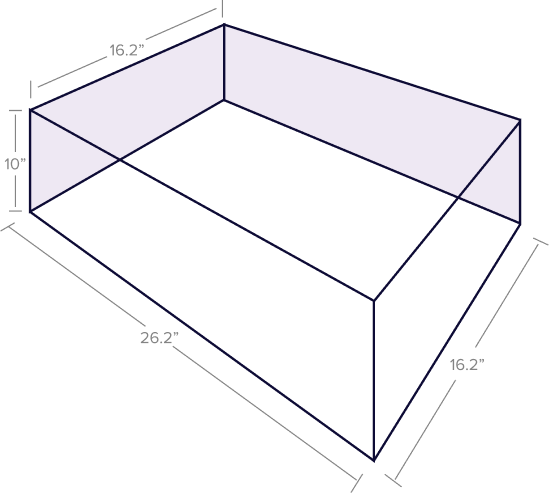
golden cuboid
The second best shape is said to be the ‘golden cuboid’. This is a cube with the width and length both related by the golden ratio of 1.618. So if you have a 10 foot high room and can play with your internal walls to set the width of the room to 16.2 foot and the length to 26.2 foot you have a golden cuboid. The handy cuboid home theater room size calculator at https://www.psaudio.com/room-calculator/ is based loosely on the golden ratio with some professional refinement.
The third best shape is a trapagon. This follows no specific ratio but it is best if the front wall is at least a foot wider and higher than the rear one. The fourth best layout would be a standard cuboid (except a square of course).
To begin with, make some rough sketches of what a perfect home theater layout looks like to you.
Include your must-haves (TV or projection screen, loudspeakers, a minimum number of movie theater seats, etc.) and your like-to-haves (e.g. bar, concession stand, spare seating, tables, etc.)
As you work your way through the later sections, you will be able to refine your plans with some actual measurements. This might mean giving up some of your optional extras or, if you have a lot of space, you might find you can include more features than you expected.
If pen and paper sketching is not for you, consider using a digital
home theater layout tool. Options include:
While this guide focuses mainly on room layout, you will need to decide on everything from soundproofing and flooring materials to wiring requirements and cinema lighting before starting work (or hiring a home theater specialist).
Understanding how screen
size and viewing angle
affects seating distance
Which should you place in your design first? Your TV or projector screen or your theater seats? In fact, to get the ideal home movie experience, you will need to treat these vital decisions as two sides of the same coin.
The relationship between vision and distance is fixed by math so your role as a designer is limited to balancing these aspects so that everyone gets maximum enjoyment from a movie no matter where they are seated. The first distance you can anchor is the position of your first row of seats in relation to the screen. This should be directly related to the size of that screen.
There is an oft-repeated rule of thumb that advises home theater owners to place the first row of seats twice the distance of the diagonal length of your screen size. However, this is far too conservative and leads to unnecessary wasted space.
It is better to use the Society of Motion Picture and Television Engineers (SMPTE) or THX guides to viewing distance as this is based on viewing angle. Remember when grandma used to say if you sit too close to the TV you will strain your eyes? She clearly understood that if your eyes are forced to take in too wide an angle then this can lead to eye strain and headaches. This is because we have to subtly move our eyes to take in any action that is in our peripheral field of view.
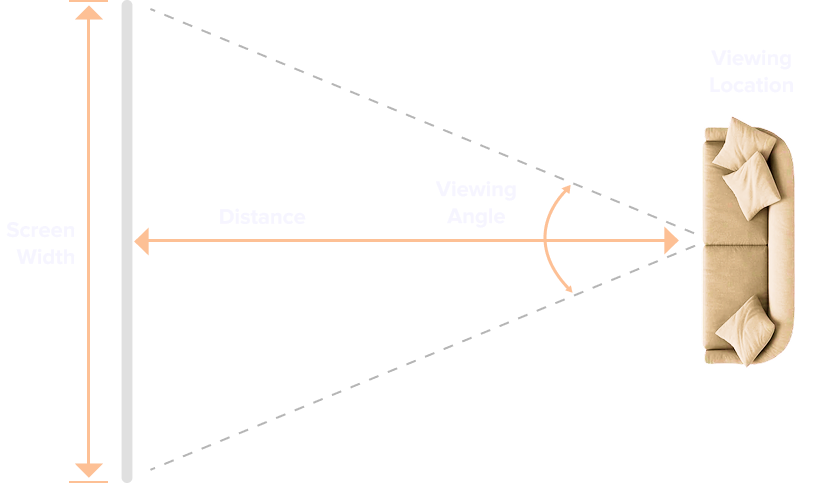

viewing angle 30

viewing angle 40
The SMPTE suggests a viewing angle of 30 degrees as a reference while THX recommends a 40 degree angle as a maximum (36 degrees for Cinemascope format). Viewing angles of up to around 60 degrees are acceptable before eye strain becomes a concern.
On the other hand, too narrow a viewing angle reduces the benefit of the high resolution technology while reducing immersion (more of your field of vision is taken up by the wall around the screen).
Rather than do the math yourself, you can simply enter your screen width and viewing format into this calculator: https://myhometheater.homestead.com/viewingdistancecalculator.html
If you are planning multiple rows:
If you are planning multiple rows, it is worth knowing that the viewing angle rapidly decreases with distance when you have a small screen. This can lead to a significant difference in viewing experience between rows. This can be a good thing, since people have different preferences when it comes to viewing angle. The trick is to get as many viewers in and around that 30 to 60 degree range as possible.
In terms of vertical placement, it is best to place the center of your screen directly in line with the viewers' eyes. If you do need to mount it higher, make sure that the vertical viewing angle remains within 35 degrees.
If you are installing a projection screen, you must work out where your projector will need to go. This is where the projector’s throw distance is important as this will constrain your design options.
What about resolution?
With older resolutions such as 720p, sitting too close to a projection screen or TV would lead to pixelation. This isn’t really an issue with modern resolutions such as 1080p, 4K and 8K. By the time you get close enough to see individual pixels your viewing angle will be uncomfortable anyway so there is no need to overly complicate things by worrying about screen resolution.
Acoustics and speaker placement
Placing your home theater speakers is a more complicated task. Not only is balancing the sound in a room notoriously difficult, people also have individual preferences.
Seating 4 feet from any speaker
All seating should be at least four feet from any speaker
Front left and right speakers: 22 to 30 deg.
Front left and right speakers should form an angle of 22 to 30 degrees to the center line
Placement of the Subwoofer
Subwoofers should be placed on the floor between the front row of seats and the screen
Surround speakers: 90 to 110 deg.
Surround speakers (if any) should form an angle of 90 to 110 degrees to the center line
20 inches from the back wall
Your back row of seats should be at least 20 inches from the back wall of your home theater
Rear surround speakers: 135 to 150 deg.
Rear surround speakers (if any) should form an angle of 135 to 150 degrees to the center line
Central channel loudspeakers on the center of that center line
Imagine a straight line between the center of your front row and the center of your screen. Place your central channel loudspeakers on the center of that line (ideally at ear level)
Additional wide speakers should be placed evenly
Additional wide speakers should be placed evenly between the front left/right speakers and the surround speakers
Hard Ceiling, then soft floor
If you have a hard ceiling, your floor should be soft and vice versa
One of the biggest issues with acoustics in home theaters is sound bouncing off hard surfaces creating a distorted sound. This can be controlled by the careful placement of acoustic panels and bass traps but does require either trial and error or expert help. In a traditional surround sound set-up, loudspeaker output can be controlled via your AVR’s ‘room control’ function or similar. The latest amplifier models will give you full parametric control over audio output.
How to measure
home theater seats
Have you ever scratched your head when looking at home theater seating diagrams and wondered how the calculations were done? This explanation should clear up any doubts you have about your ability to do math.
Measuring the width of home
theater seats
There are two different ways you can measure the width of home theater seating.
First Method
One method, which is how we do it in our product specifications, is to provide the width of one entire seat, including both arms, and to further break down this into standard arm width, wedge arm width and seat width without arms. We then provide full diagrams of all possible combinations so you can see the measurements for yourself.
shorthand method
A shorthand method is to measure one chair from the center of one arm to the center of the other. You can then calculate the width of any row by just multiplying the number of seats by this figure and then either adding or subtracting the width of one arm (depending on whether there are more or fewer arms than seats).
Here is an example using the Octane Turbo XL700:

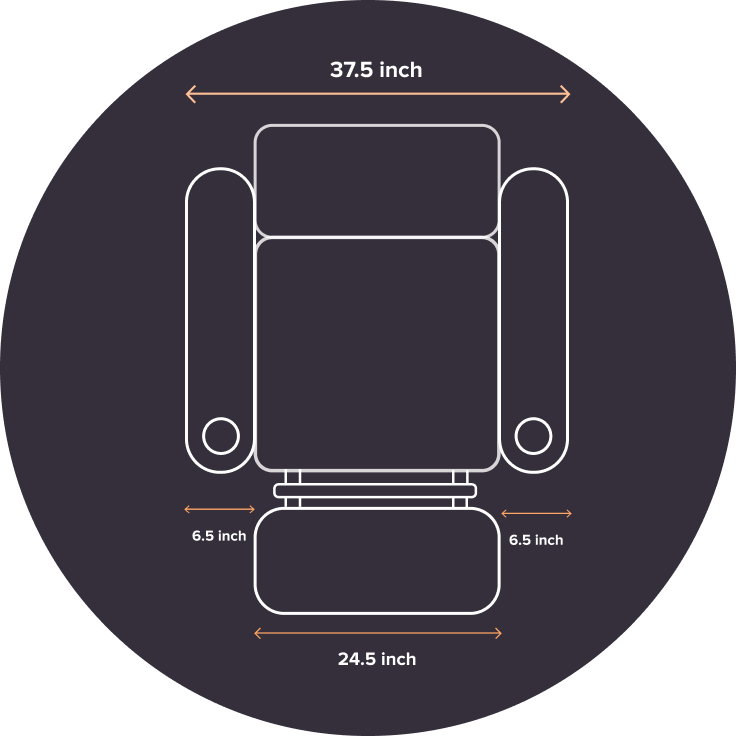
From the specifications sheet you can see that the full width of each chair is 37.5 inches comprising a 24.5 inch wide seat and two 6.5 inch arms.
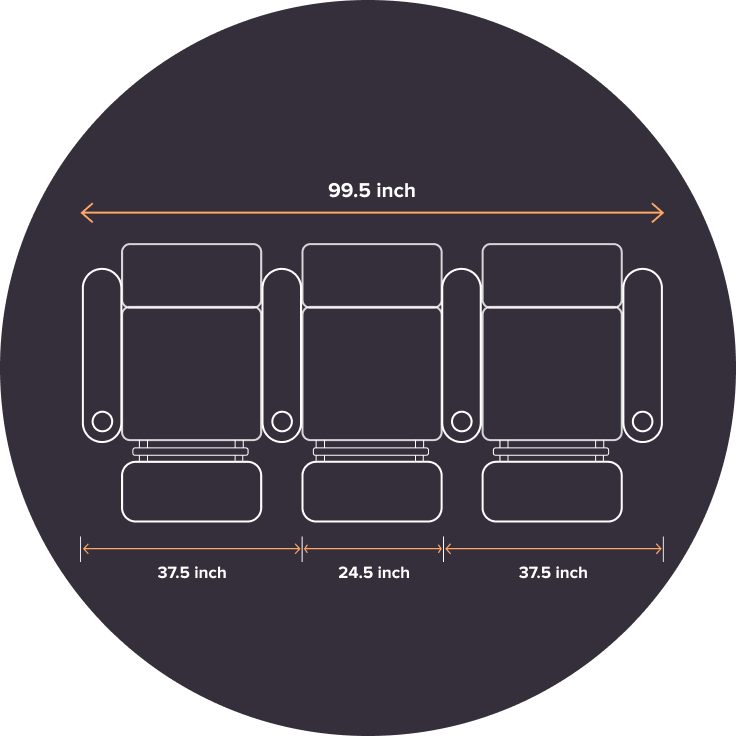
Looking at the diagrams you can see that a straight row of three theater seats equates to two full chairs (2 x 37.5 inches) plus one armless chair (24.5 inches) for a total of 99.5 inches.
For a sofa,
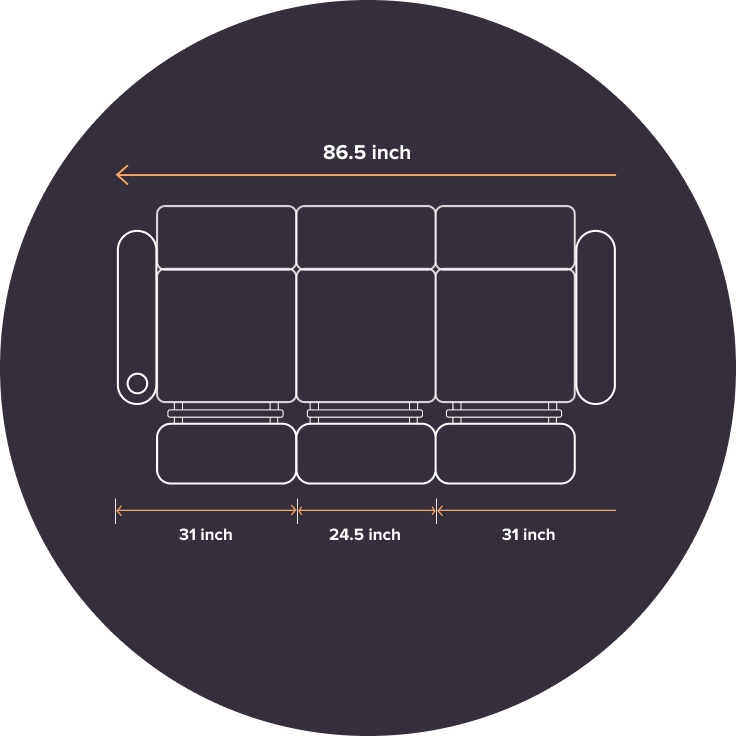
You can add together the dimensions for a left arm chair (31 inches), armless chair (24.5 inches) and right arm chair (31 inches) for a total of 86.5 inches
Using the other method, the measurement from arm center to arm center is 31 inches. For a straight row of three chairs you multiply this by three chairs to get 93 inches. Since there are four arms, you add the dimension of an extra arm (6.5 inches) to arrive at a total of 99.5 inches.
Applying the same calculation to a sofa, you get 93 inches minus 6.5 inches as there are only two arms. This gives you a total of 86.5 inches.
If you are planning rows with curved seats, make sure you use the width of the rear of the wedge arm as your arm measurement.
Measuring the depth of home
theater seats
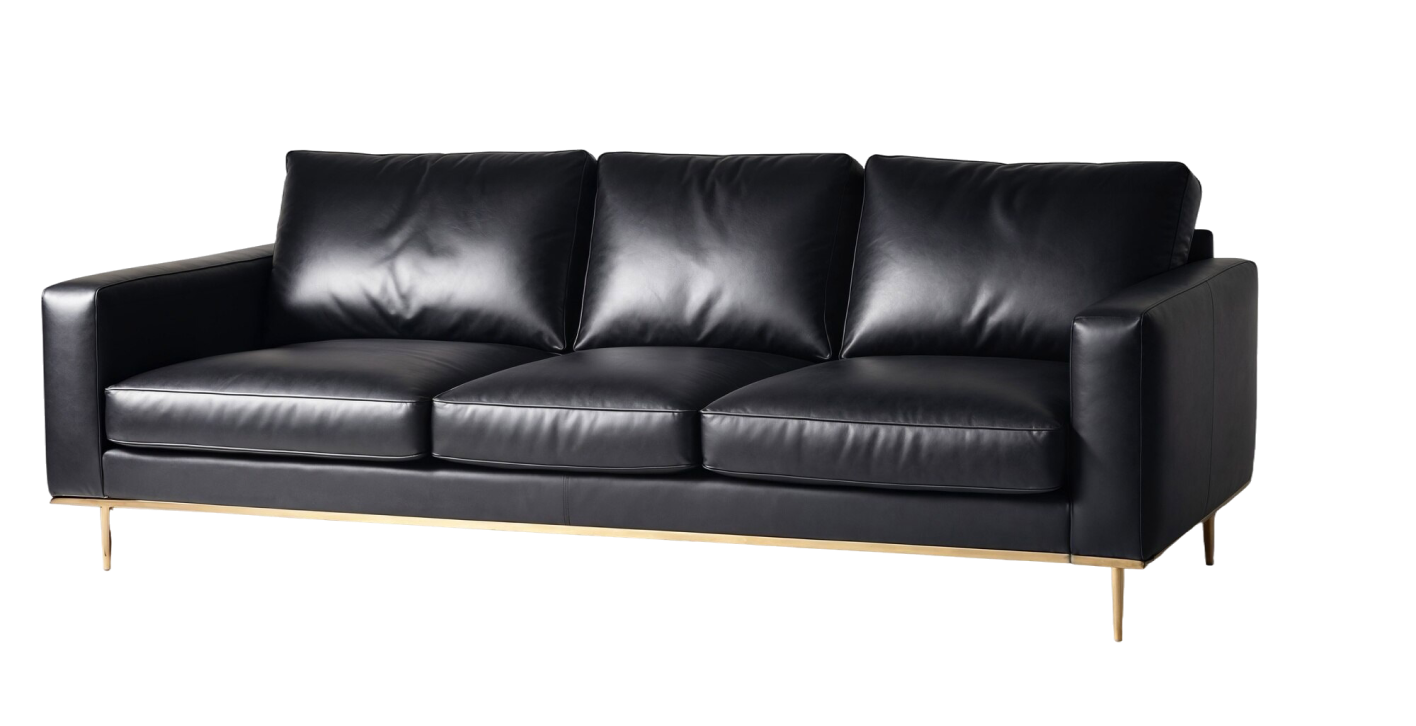
Measuring the depth of movie theater seats is much simpler than calculating width. The depth will either be fixed or, for a recliner, there will be a value for the unextended and fully extended chair. When calculating your spaces between rows, you will want to use the fully extended depth of any recliners in your home cinema layout.
Estimating the measurements of
your home theater seats
Of course, it is highly likely that you will start designing your home theater room layout before deciding which seats you will be buying. In this case, it is very useful to be able to estimate the size of a home theater seat.
There can be quite a large variation in dimensions between chairs
To be on the safe side, assume each chair will take up 40 inches square and extend to 70 inches when fully reclined. This will be generous enough for most home theater chairs (e.g. it covers our entire Octane range).
If you are very tight on space, consider basing your measurements on 34 inch square movie seats but be prepared to do some shopping around for the ideal seat. Stadium seats tend to be smaller in size so you may need to consider these.
To help you with your layout planning, here are the core dimensions of some of our most popular home movie theater seats. Please note that specifications can change:
(All the measurements are in the Inches)
| Seat Model | Full Width | Depth | Depth when Incline |
|---|---|---|---|
| FLEX HR | 36 | 37.5 | 69 |
| TURBO XL700 | 37.5 | 36 | 66 |
| FLASH HR | 35 | 38 | 69 |
| MEGA HR | 39 | 40 | 69 |
| WAVE HR | 36.5 | 38 | 68 |
| CONTOUR HR | 37 | 40 | 68 |
| CHARGER XS300 | 33 | 39 | 68 |
| CURVE HR | 36 | 39.5 | 69 |
| ZONE LHR | 37 | 38 | 69 |
| DREAM HR | 36 | 38.5 | 67 |
How many home theater seats
do I need? Spacing your rows
From the information so far, you should have an idea of the size of your TV or projector screen and the distance from the screen of your first row of seats. From here, you need to plan out how many seats will be in your first row and the placement of any subsequent rows not forgetting to leave space for walkways.
The figure of 20 inches will be a useful guide for remembering how much space you need to leave between rows and aisles of seats.
For example, at either end of each row of seats you should leave at least 20 inches between the last seat and the wall or any other feature.
It is also recommended that you leave at least 20 inches from the back wall since anyone sitting too close to that wall is likely to be affected by reflected sound, particularly at the bass frequencies.

You should also leave 20 inches if you can between rows. Ideally, this will be when all seats are fully extended although you may need to reduce this to keep all chairs within the maximum viewing distances calculated earlier. Try to leave at least 14 inches between rows in this case. If you have mobile theater seats, you have a little more flexibility. However, if you can’t fully recline a seat that is to be bolted down, it is better to choose a different model. You could opt for a space saving recliner or avoid reclining chairs altogether.
It is at this stage that you might want to experiment with different seating layouts. If you have a large space and screen and intend to regularly entertain a host of friends and family, multiple rows makes sense. However, if space is restricted and you are mainly going to be enjoying movies with close family, a smaller screen with just one row of seats may suffice.
If space is restricted and you are mainly going to be enjoying movies with close family, a smaller screen with just one row of seats may suffice.
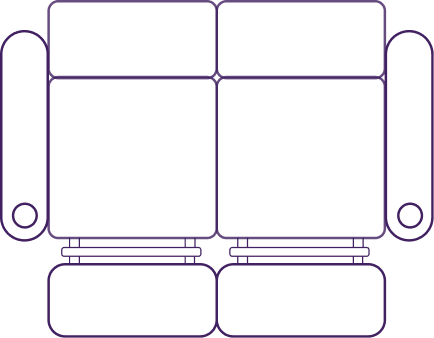
You can then move on to more nuanced considerations. Are most of your friends in couples? Incorporating loveseats is a great way to economize on space while catering for those who want to cuddle up during a romcom. Some models offer a compromise with detachable arms that can be stowed away when not needed.
Curved seating arrangements
Curved seating arrangements, created through the use of wedge shaped arms, is another way to enhance the feeling of camaraderie as you anticipate the latest action thriller. Just remember to use the widest part of the arm when calculating your row space requirements.

Spacing a row: a worked
example
For this example, imagine you have a 12 foot wide home movie theater and are looking to work out how many theater seats you can fit in the space. You are torn between the Octane Flash HR (35 inch wide) and Octane Mega HR (39 inch wide) theater seats.
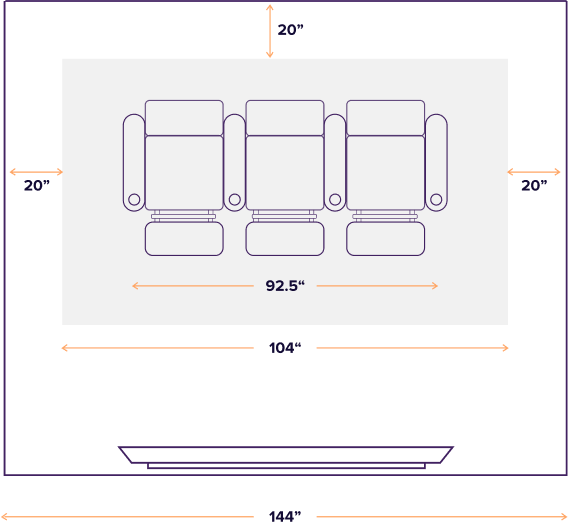
First, convert the total width into inches (12 x 12 = 144 inches). Next, remove 40 inches to give you 20 inches clearance from either wall. Your seats have to fit into 104 inches.
Using the specifications chart, you can see instantly that a row of three Flash seats will measure 92.5 inches and so will fit comfortably within the space. You could also arrive at that figure by multiplying the arm center to arm center measurement of 28.75 inches by three (86.25 inches) and adding the extra arm (6.25 inches)
At 102 inches wide, you could even go for a curved row of three Flash theater seats.
Despite its wider frame, the Octane Mega HR will also just about fit in the space with three chairs measuring a total of 103 inches. However, a curved row of three would only work if you converted one pair of chairs into a loveseat.
Both models are recliners which extend from 40 inches to a full length of 69 inches. Therefore, you should place the next row no closer than 35 inches behind the first (giving each chair 15 inches of rear extension plus 20 inches).
Adding height to rear rows
To avoid people in the front rows of your home theater blocking the
view of those in front, you should consider risers. Some models of
home theater chairs are built on risers and this may be sufficient if you
only have two rows of seating. For multiple rows, you may need to
consider building construction of a riser into your home theater plans.
As a rule of thumb, risers should add between 6 and 14 inches of
extra height per row.
Media room layouts and
seating options
For smaller rooms of 10 foot square and below, a media room is likely to be a better option than a home theater. While you might not get the full home cinema experience, you will have more flexibility with layout and equipment choice.
Due to the smaller space, you are better off reducing capacity and choosing a smaller number of higher quality theater seats (e.g. opting for luxurious Italian top grain leather upholstery over bonded leather). To maximize use of space, consider replacing single chairs with loveseats or sofas.
To maximize use of space, consider replacing single chairs with loveseats or sofas.
Multiple screen media rooms
Multiple screen media rooms will also delight sports fanatics. Digital sports streaming services often enable viewers to switch between different camera angles. With multi-screen media centers, sports enthusiasts can analyze the action from different cameras simultaneously.
Multi-screen layouts also offer a more convenient way to handle multiple desktop windows, better quality group video calls and a central hub for home security camera footage.
For smaller media rooms, finding the space for true surround sound can become more trouble than it’s worth. Fortunately, many audio-visual brands have created impressive soundbars with digital processing technology that can simulate surround sound. Some are even compatible with the latest Dolby Atmos format.
Lighting is a vital consideration for a media room. When watching a movie, the more completely you can block out ambient light, the more enjoyable your experience will be. Adjustable lighting is preferable, particularly if you will be using your media room for a wide range of activities.
When watching a movie, the more completely you can block out ambient light, the more enjoyable your experience will be.
High speed wireless connectivity is becoming increasingly important for the home media center. Every year, more smart devices are coming on to the market which can be controlled via voice activation using Wi-Fi. Bluetooth-enabled devices add more versatility, enabling devices such as smartphones, ear-pods and PCs to automatically pair with one another. By minimizing the number of wires, your media room can become a tidy, well-organized space.
As with any major construction project, the more planning and measuring you do in advance, the more likely you will end up with a final result you are pleased with.
Using this guide, you can bring your dreams to life and create the perfect home theater or media room.
Key Questions
- Home Theater Chairs & Seating
- Wall Hugger Recliners for Tight Spaces
- Curved Rows for Wider Rooms
- Raised Row Seating for Tiered Rooms
- Side-by-Side Loveseats for Two
- Two-Seat Theater Configurations
- Three-Seat Theater Configurations
- Four-Seat Theater Configurations