
A Guide to Speaker Wire
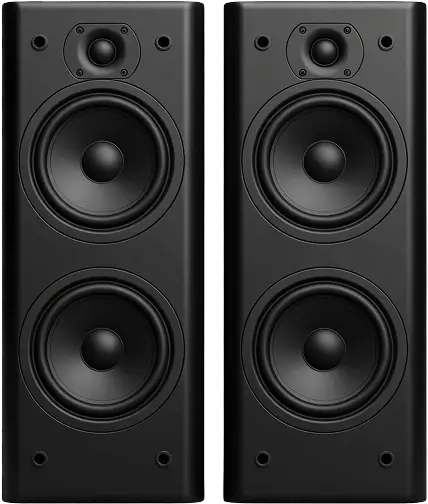
If you care about sound quality, the short answer is yes. Whether you’re blasting your favorite playlist while cooking dinner or trying to catch every line of dialogue during movie night, the difference that good speakers make is hard to ignore. Clean, crisp audio turns an ordinary listening experience into something you can actually feel, and once you’ve heard it, there’s no going back.
The process of selecting the best material for the speaker wire, as well as its gauge, resistance, and length, is key in achieving the sound system that you have always wanted

material

resistance

gauge

length

electricity
Factor in the electrical limits of your amplifier, the number of speakers you’re connecting, and the finer details of wire terminations, and what started as a simple setup can quickly turn into a full-blown project.
How to Get the Perfect Speaker Wire Experience
But thankfully, the experience of working with speaker wires and selecting the perfect fit for your sound system is fairly simple, once some aspects are explained and understood.
Once that is complete, you should be able to easily and confidently set up your own speaker wiring system.
We will cover why it is important, explore the key criteria that determine your speaker wire selection, as well as some tips on general wire maintenance and considerations. This is your one-stop shop to getting your speakers wired perfectly!
What is Speaker Wiring?
In short, speaker wire is the cable or wire used to connect your audio amplifier to the home loudspeaker system.
The wires essentially work as the nervous system of your sound system, transferring the information between the two key components of amplifier and speaker.
This means that your sound system will be particularly dependant on speaker wiring for the quality of sound produced and its clarity, making speaker wire a key factor to your system.
Does it Improve the Quality?
We have all had experience of that unpleasant, unclear sound that comes from a bad speaker, but that could actually be an issue with the speaker wire instead.
This is the quick version of the technology of speaker wire—it is the wire used for the electrical connections between speakers and amplifiers. This current carried by the wire gives power to the speaker drivers, allowing them to work and produce sound.
There are a few key electrical properties to cable wire: resistance, capacitance, and inductance. These effect the electrical flow, but the most important consideration is the first, resistance, which will be discussed later.
Conductors & Their Importance
Speaker wire typically has two sheathed conductors, for connecting to the positive and negative connectors on your amplifier and speaker.
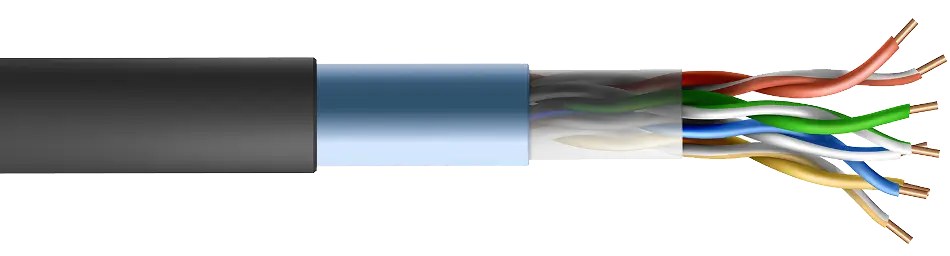
The inner core is protected from the outside by a plastic insulation and before the wire is connected to the amplifier or speaker, this plastic must be stripped back a bit to expose bare wire.
Even though this bare wire can be connected to the speaker connectors directly with no issue, you can use a form of termination on the bare wire to make this connection simpler and more reliable.
What’s Important about Speaker Wire?
Let’s get a little more in depth about what makes up speaker wiring. Is it important to get the proper wiring for your sound system?
The short answer is yes, but it does not have to cost a fortune. Getting proper speaker wire makes it easier to identify which side of the wire is positive, and which is negative.
- Easy to run the wire and connect it
- Reduces pesky electrical interference from other signals around
- Protect the core from oxidization as well and not deteriorate over time and use and contaminate the wiring within

How Resistance can Impact
Sound Quality
The ideal speaker wire for your personal sound system depends its core and how low its resistance is—the less resistance there is, more of the amplifier’s signal will travel to the speaker.
For instance, copper as a material for speaker wire is a common choice because of its status as a low resistance conductor for electricity between amplifier and speaker.
The less resistance there is, more of the amplifier’s signal will travel to the speaker.




Apart from resistance, the other two main things to consider when shopping for speaker wire is the material used for the conductor wire core, and the thickness (or gauge) of the wire.
Quality of Speaker Wire
However, there are debates surrounding the quality of the speaker wire, and these discussions on the topic are likely to continue for years to come.
Certain brands or types of speaker wire can be quite expensive, and while some people see this as a worthwhile investment, other people feel that this cost is exorbitant and far too hard on their wallets, preferring to spend the excess money on a better amplifier, loudspeakers, or other equipment.
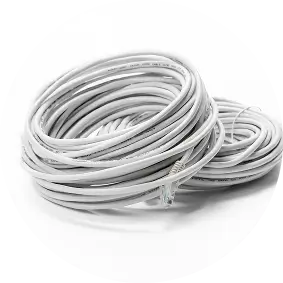
Some people spend the money on
Expensive wires
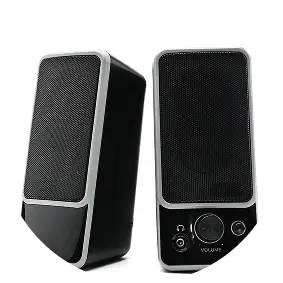
And some people spend the money on
Better amplifier, loudspeakers, or other equipment
There are so many options in the world of speaker wires in terms of brands and cost, but we will focus on the most important aspects of how to select the perfect speaker cable for you, starting with the basics of what is most important to sound quality—starting with wire materials.
Materials for Speaker Wire
The material you choose for your speaker wire is an essential part of selecting the best speaker wire for you.
Generally speaking, though different metals and levels of purity are available for speaker wiring, the purer the wire the higher the cost per foot. And whether or not this lends a significant bonus to your audio, that is up to your own preference and ear.
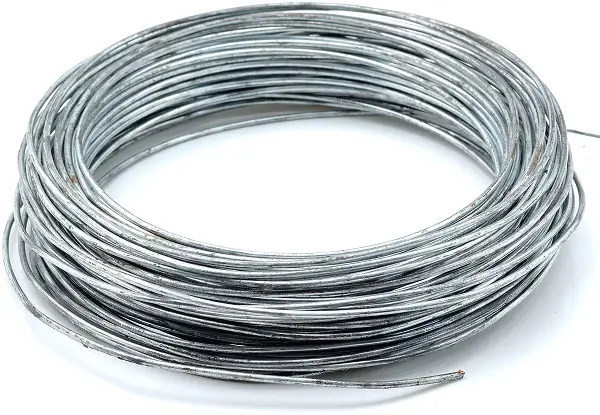
The basic choice in speaker wire, copper has been used in so many industries for decades as an electrical conductor.
Copper speaker wire is the most widely used material because of its low cost and low resistance. The wire is made up of stranded copper, containing many filaments of the material all in a bundle inside its plastic coating. Speaking of plastic coating, copper does oxidise so it must be kept well covered and insulated.
Aluminum) Wire
The copper-clad aluminum wire enjoys a wide popularity in speaker wire enthusiasts’ opinions.
This type of wire contains a heart of aluminum wire that is quite a lot less conductive than the copper around it, meaning that a thicker aluminum wire is needed inside the conductive copper wrapping. Still an incredibly popular wire, this is an affordable option that comes with great sound quality.
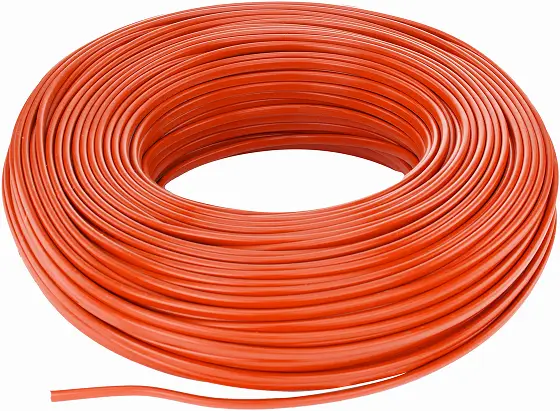
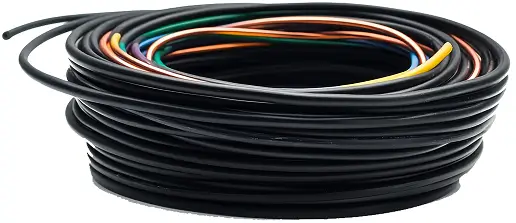
This wire is popular in the more niche “audiophile” world of sound system products.
Silver offers a slightly lower resistance than others, which means a thinner gauge will still give your connection a low resistance and thus a greater electrical flow. However, because of the relative prices of silver to copper, a thicker copper wire might actually be cheaper to buy and offer comparable resistance.
Other Important Qualifications
There are also other important qualifications and attributes when it comes speaker wires; they can include the gauge, resistance and length; all that will be discussed in the section below.

The higher the gauge, the smaller the thickness of the cable. This is based on the American Wire Gauge (AWG) commonly used in North America, with the most standardly used speaker wire gauges being 12, 14, or 16-gauge. The thing to keep in mind when considering speaker wire gauge is as follows: the thicker the wire and lower the gauge, the more resistance of the wire decreases, and resistance is always best kept beneath a particular level.

As previously mentioned, the lower the resistance, the better the signal from the amplifier traveling through the wire to the speaker.
This is why speaker wire materials have varying metals and thicknesses, to equate for differences in resistance. When considering wires, try to keep the resistance factor no greater than 5% of the speaker’s output.

There are two key things to keep in mind about the length of your speaker wire.
The first, keep your lengths as short as possible—because resistance is proportional to length, it is ideal to keep your wire lengths as short as possible, giving the electricity less ground to cover.
Impedance and OHMs
To put it simply, impedance is the measurement of how much a speaker resists electrical current coming from your amplifier, and this is measured in OHMs.



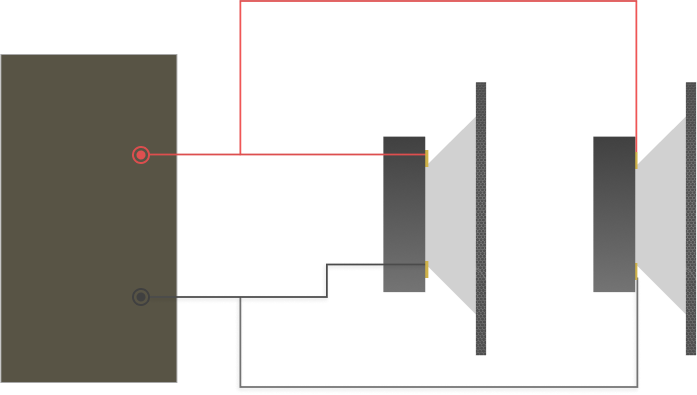
The unit of OHM is also depicted by the Greek alphabet letter of Ω (omega). Every speaker has a fixed and measurable OHM rating, and this is important to take into account while dealing with your speaker wire.
Because the amount of OHMs a speaker draws equals the impedance to function, a speaker that is lower in OHMs will draw more power from your amplifier and cause it to be more taxed than with a higher OMH speaker.
The amplifier is labelled to work with 8 Ω speakers, but your speakers are 4 Ω speakers. The amplifier will have to produce double the electrical current to support the speaker!
Luckily, this is not a formula that you need to be particularly familiar with or memorize. The impedance value is generally found printed on the unit itself. Matching the speaker impedance rating to the amplifier’s OHM compatibility is fairly simple, and all you have to do is pay attention to the labels and not exceed the minimum speaker impedance rating.
What are the Options in Speaker Wiring?
Your next options for your speaker setup deal with wiring and your type of amplifier—do you go the single route, or the double?
This is your next consideration, following from your choice of wire material. Your wiring option will be dictated by what type of amplifier and speaker combination you have, whether it is a double or single connection. Typically, the more expensive the amplifier, the more likely it is to be a double connector.
Bi-Wire
This is a four-cored wire unit, used when the amplifier and speaker have two sets of connector sources, typically one for bass and one for other frequencies.
Now, there can be what is known as a “cross-over unit” in the speaker creating two outlets, but it can also be situated in the amplifier, separating the lower and higher audio frequencies.
People have voiced the opinion that having these levels tailors the sound of music and gives it more detail, but this seems to be personal preference.
Single Wire
If your speakers and amplifier only have one connector source, this one is your golden ticket!
No need to look further than the typical, single wire that consists of two cores. Some people say that single-wired speakers produce a more musically coherent sound compared to the bi-wired, but once again as with many topics in the audio world, this is a matter of personal, musical opinion.
What about the
Ends of Speaker Wiring?
So, you have gotten your speaker wires, you have your amplifier and speakers, but what goes on the ends of those wires?
There are some specific terminations available to use at the ends of your wires to help in connecting to sources on amplifiers and speakers.
Of course, it is fully possible to purchase your speaker wire without a specific termination connecter attached. You can attach it directly to the amplifier and speaker sources.
Some audio experts recommend that if you intend to change or modify parts of your home sound system frequently at all, that you might want to go with termination connectors at the ends of your wires. It just makes it a bit easier to plug and unplug the elements. If you want to hook up your setup once and then sit back and enjoy for years, a plain unbound wire is just fine.

Extending Speaker Wiring
While the idea of extending your own speaker wire at home through splicing and soldering might seem daunting, it is perfectly doable.
There is also the option of a piece of hardware that attaches to the existing terminal end of the wire, known as a “banana plug extender”, that allows the ends of speaker wire fitted with that terminator to attach for length.
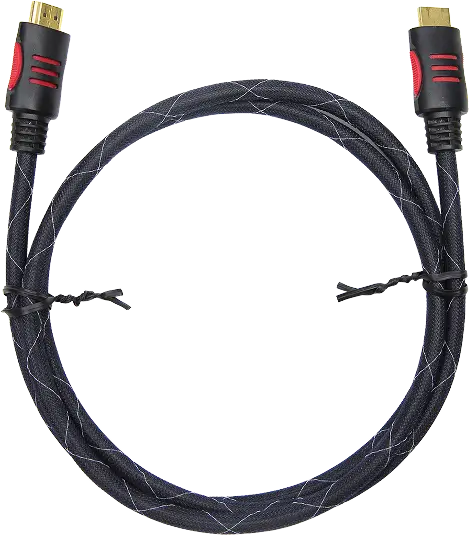
And whether you decide to utilize prefabricated speaker wire extenders, or get your hands dirty doing it yourself, extending wires for your speaker systems is a great option for getting just a couple inches of cable.
Extension by Soldering
Adding more length to your speaker wire through soldering might be more time consuming, but it also is an extremely reliable way to extend wire at home.
All you will need is some time and soldering equipment, as well as a space to work in.
There are several useful guides to be found on the
internet, like these handy guides:
Extension by Crimp Connectors
This is the easiest way in which to extend your speaker wires at home—crimp connectors give excellent results in minutes and is a simple approach for anyone looking to add length to their wiring.
Supplies needed are fairly easy, including pliers, crimp connectors, and utility scissors. Please refer to this step-by-step guide for more information:
Outdoor Speaker Wiring
Not all home sound system setups are confined within the four walls of the actual house. What about a yard decked out with its own sound system, perfect for summer night barbeques?
Well, luckily, there are ways in which to safely run your speaker wire outdoors! In this case, it is especially important to follow some guidelines for safe installation and to make sure the weather will not affect the wiring.
To avoid any drop off in the electrical frequency, or total signal loss, it is essential to take a few extra steps. Regular speaker wire of whatever the best material, gauge, and OHM compliance is best for your setup is fine to be used outside if you choose to, as long as some wiring precautions are followed.


Wherever your speaker wire is coming from, it is essential to keep it well secured on its journey.
Having an outdoor speaker that connects to an indoor amplifier likely means that your speaker wire will need to run through a crawlspace or attic, which means you need to staple the wire as snugly as possible to whatever surface you are running it over.
Having your speaker wire outside is fine, so long as it has not been stripped too far.
No exposed wire should be visible outside of the protective plastic insulation, as that leaves it susceptible to oxidization and wear. Using snug electrical tape to reinforce any joints in the speaker wiring is useful, as is using wire that comes with termination connectors already attached for easy and unexposed attachment. It can be a good idea to wrap around even the termination connector with electrical tape, just to ensure absolutely no part of the wire is exposed to nature.



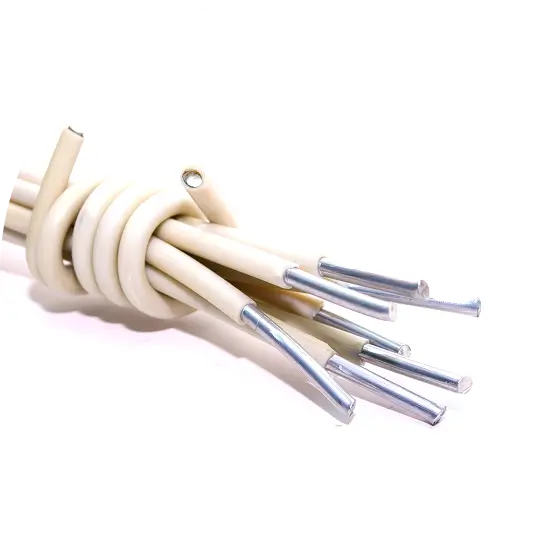
If your wire is heading to a speaker that is a longer outdoor distance away from the amplifier, burying the wire could be the best way to prevent any wear or accidents.
For doing so, a gray, non-metallic PVC pipe does a fantastic job—it not only protects your wire from rodents and critters, but also from any weather or ground seepage, and will last for a long time when placed!
5 Myths about Speaker Wiring
We are all familiar with popular “myths” that pop up around any topic these days. And the world of speaker wiring is no different in that regard.
While we have already discussed the options that people have in terms of speaker materials, and how personal preference plays a part in that, here are some myths about speaker wiring that have cropped up.
myths could save you some major time, effort, and
money.
Splicing degrades the sound
Although the idea of home splicing and soldering your own wires might sound like a daunting thought, and raise worries about the quality of the sound after such an operation, audio experts have determined that well-spliced wires do not necessarily sound worse.
Any audio anomalies tend to be too miniscule for the human ear to pick out. The energetic voltage that powers the speakers through the wire is simply just that—energy, and not a direct line of the audio itself.
Speaker wires should be
exactly the same length
Though we have touched on wire length earlier, another myth is that your connecting wires between amplifier and a pair of speakers should be of equal length.
Of course, the length of your wires may have to be unequal simply because your speakers are in not equidistant to the amplifier and each other, but are in place for the perfect surround sound experience. That’s okay! In the long run, it likely will not have an audible difference to your sound system’s functionality.
Thicker wires are better
While a valid point for very long runs of wire, where the thickness might reduce the effects of resistance over a greater area, for most home setups a normal 16- or 14-gauge wire is perfectly suitable.
This includes the typical home sound system runs of between 100 and 200 ft. from the amplifier. There is no real audible benefit to using incredibly thigh gauges of wire for such home runs.

Solving skin effect
Skin effect refers to the plastic insulation surrounding the metallic core of speaker wires.
The wires rely on this insulation not only for protection from elements and oxidization, but for protection from other electrical signals from other devices that can affect the voltage running to the speakers themselves.
So, it is probably best if you do not waste money on any intricately braided speaker wires to “solve” it.

Breaking it in is “critical”
According to some, having only a small amount of electricity trickling through the speaker wire does not maximize its potential and could even physically degrade the wires over time.
through the speaker wire


& could even physically degrade the wires over time
This leads to selling wire “cookers” to push more electricity through the wires, but this honestly does not create an audible change to the product. The speaker wires conduct exactly the amount of electrical current to the speakers the wire is designed for, and that’s what looking closely at materials, gauges, and OHMs, are so important for!
Speaker Wiring Maintenance
Speaker wire maintenance is fairly simple, and something that you can most certainly do for your home setup!
All you need are a few common cleaning supplies and a little bit of time in order to properly clean and maintain your speaker wires. Ensuring that your sound system is not only easy on the ears, but neat and tidy, is a great way to maintain your setup.
Unplug your system, beginning with the main power cable at the wall, and then the main power cables at the component box.
After the power has safely been removed, you can continue unplugging the wires at your convenience.
You can use a brand-name electrical contact cleaning product for speaker wires and power cables, along with a microfiber cloth to apply it.
Q-Tips can be useful for getting into the groves on the wires where a buildup might be found. Alternatively, you can use any type of Isopropyl alcohol cleaning fluid in place of the brand name cleaner, but only apply this to the outside of the wires to clean off any dirt collected there.
Luckily, the speaker wire itself that is inside a banana plug or other type of termination connector should be well protected from grime, which is definitely an advantage of using those types of connectors. If the connectors themselves are looking a bit dirty, then feel free to give those a wipe-down as well!
Summarizing Speaker Wires
While the actual process of connecting your speakers, amplifier, and wires is fairly straightforward, it is recommended that you make sure your specifications are ideal for the setup.
Of course, there are so many different sound preferences for different listeners and circumstances. Your audio system may need some subsequent tweaking to perfect your personal sound, but once you find the golden ratio—let the symphonies play!
Setting up your own home sound system is not only budget-worthy but can be a great source of satisfaction. It always feels great to step back and view the project that you have successfully completed. And with our discussion on the intricacies of speaker wire and how to master it, we hope you have that same sense of satisfaction in your home sound system.