
Ballet has a language all its own, built over centuries of tradition, technique, and artistry. Understanding the terminology is essential for dancers, students, and anyone interested in the structure and flow of a ballet class or performance. These terms, many of which are in French, describe everything from positions and steps to qualities of movement and stage directions. Knowing them deepens appreciation for the precision and expression that ballet demands. Whether used in training or choreography, each word carries a specific meaning that shapes how dancers move and communicate on stage.

À la Seconde: A position or movement to the side, typically with the working leg extended outward
Adagio: A slow, controlled series of movements that focus on balance and fluidity, usually performed at the beginning of a ballet class or in a pas de deux
Allongé: A term that means “elongated,” often describing a position that is stretched out, especially the arms or arabesque line
Arabesque: A pose in which one leg is extended straight behind the body while the other supports the weight
Assemblé: A jump in which one foot brushes off the floor and both legs come together in the air before landing
Attitude: A pose similar to arabesque but with the raised leg bent at the knee
Balancé: A waltz-like step that shifts the dancer’s weight from one foot to the other
Balletomane: A person who is passionate or deeply knowledgeable about ballet
Ballon: The quality of appearing light and suspended during jumps. It refers to the dancer’s ability to stay in the air.
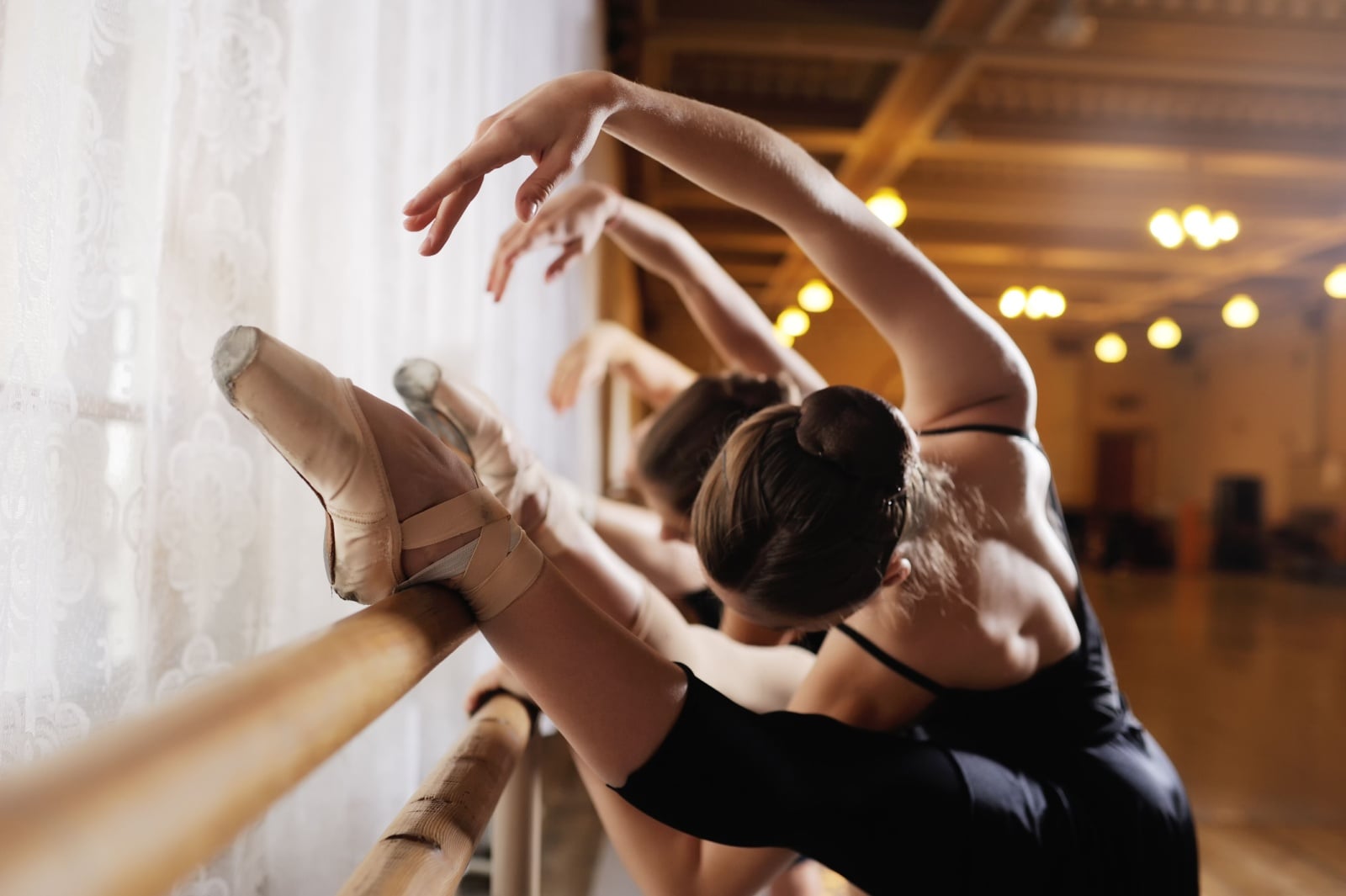
Barre: A horizontal handrail used during warm-ups and exercises for support and alignment
Battement: A beating movement of the leg, often used in forms such as grand battement or petit battement
Battu: Any step that includes a beating of the legs
Bourrée: A series of very small, quick steps done in a tight fifth position, typically en pointe or demi-pointe
Brisé: A small, beaten jump where the legs cross and land quickly
Cabriole: A jump where one leg is extended into the air and the other leg beats against it before landing
Chaînés: A series of fast, turning steps done in a straight line or circle, usually on demi-pointe
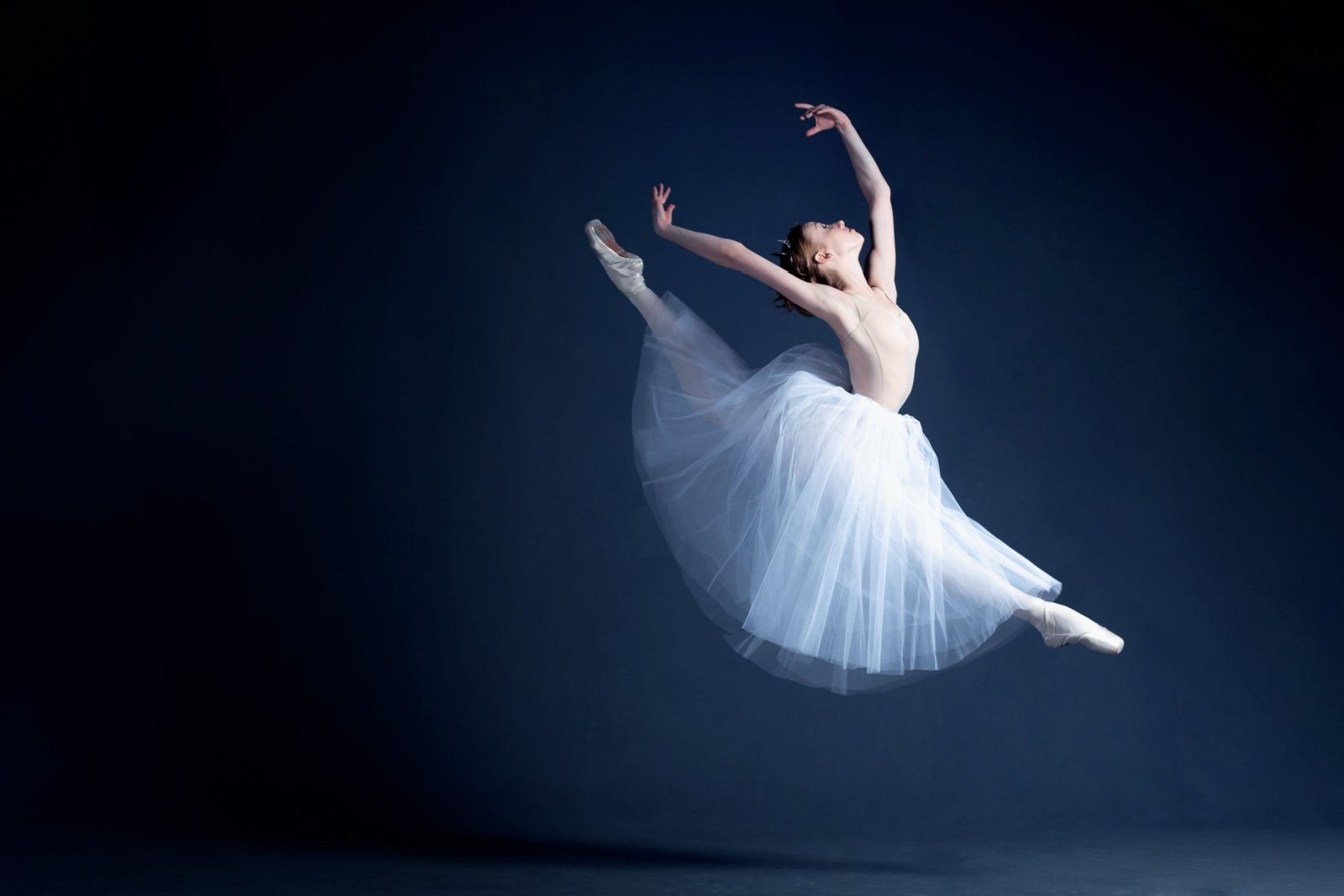
Changement: A jump in which the dancer changes the position of their feet in the air
Chassé: A gliding step where one foot “chases” the other, creating a smooth motion
Coda: The concluding section of a ballet or a pas de deux, showcasing the dancers’ most impressive movements
Corps de Ballet: The group of dancers in a ballet company who perform as an ensemble, not in solo roles
Coupé: A small step where one foot cuts in front of or behind the other
Croisé: A position where the dancer’s body is angled to the audience with the working leg crossing in front or behind
Dégagé: A movement where the foot brushes off the floor, similar to tendu but with more speed and lift
Demi-Plié: A half bend of the knees, used frequently as a preparation for jumps and turns
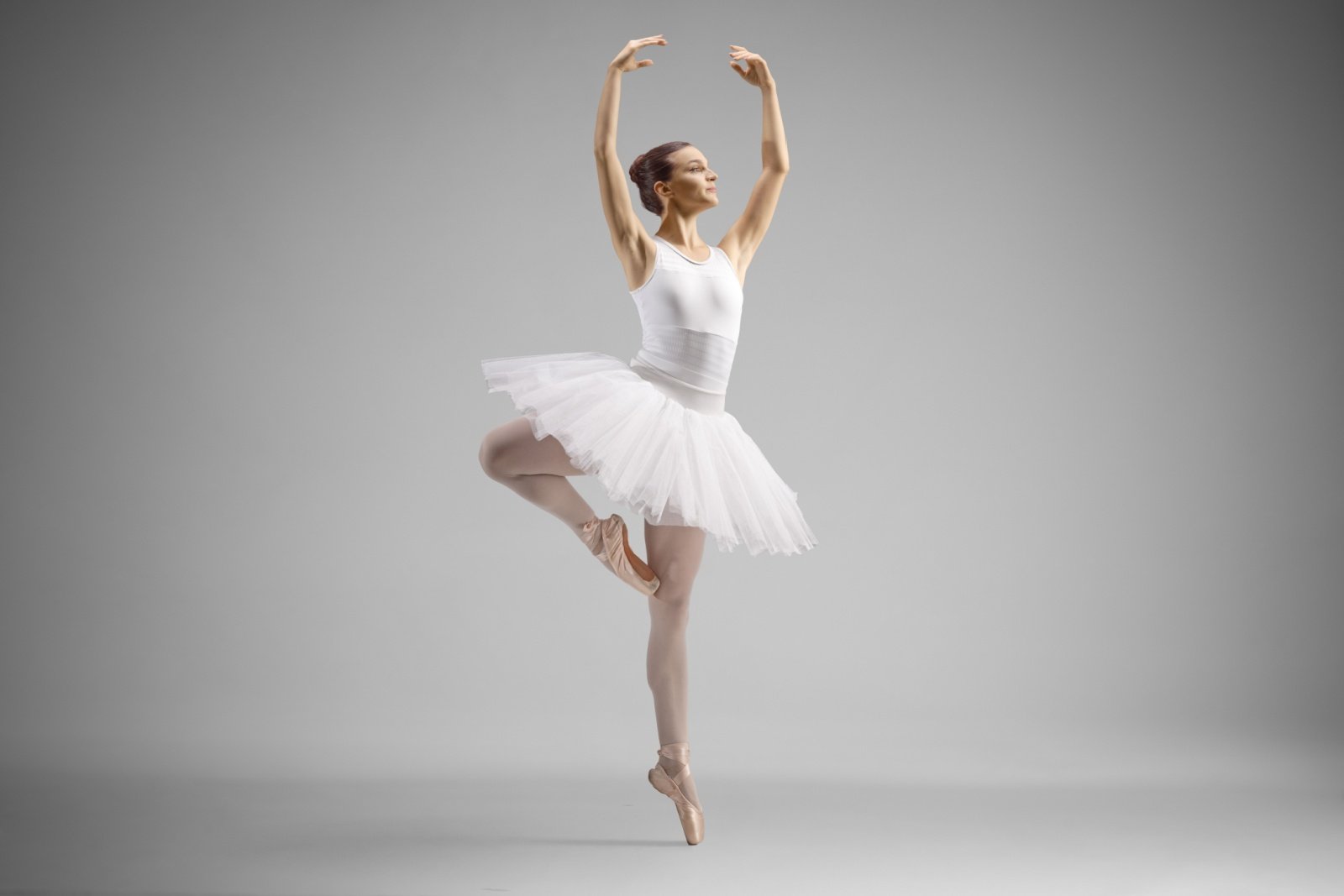
Derrière: Refers to movement or positioning behind the body
Développé: A slow unfolding of the leg into the air through passé, used to show strength and control
Échappé: A jump or sliding movement where the feet escape from a closed to an open position
Effacé: A position where part of the body is shaded from the audience; the opposite of croisé
Elevé: Rising to the balls of the feet or to pointe without a plié
En Cloche: A swinging movement of the leg like a bell, often used at the barre
En Dedans: A circular movement inward, toward the standing leg
En Dehors: A circular movement outward, away from the standing leg
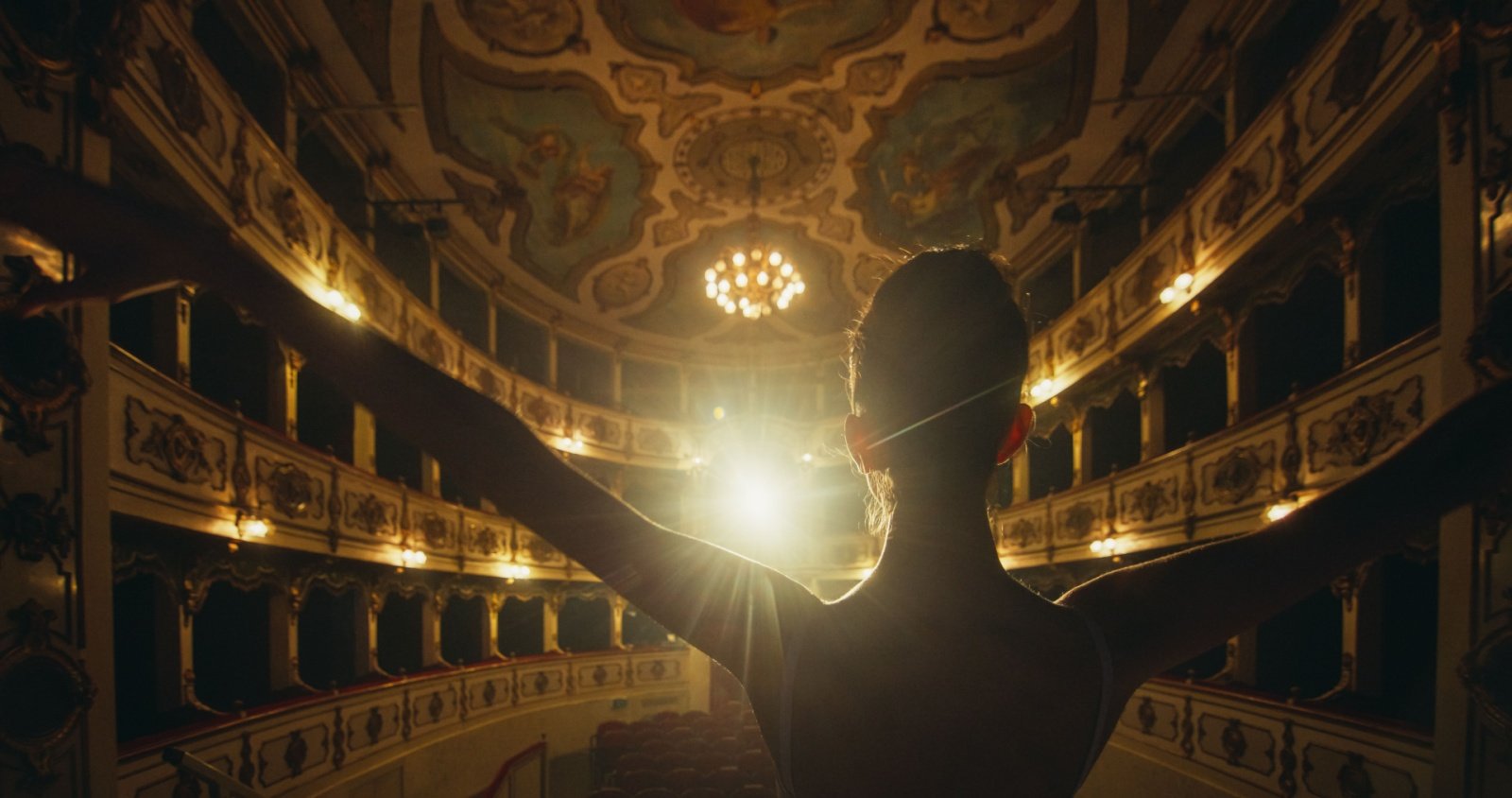
En Face: Facing the audience directly
Entrechat: A jump where the legs cross rapidly in midair
Épaulement: The positioning of the shoulders and head to add expression and elegance
Fondu: A melting movement where the standing leg bends slowly as the working leg extends
Fouetté: A quick whipping motion
Frappé: A sharp movement where the foot strikes the floor, used to develop speed and precision
Glissade: A traveling step where the dancer glides from one foot to the other
Grand Allegro: The part of a ballet class or performance focused on large jumps and traveling steps
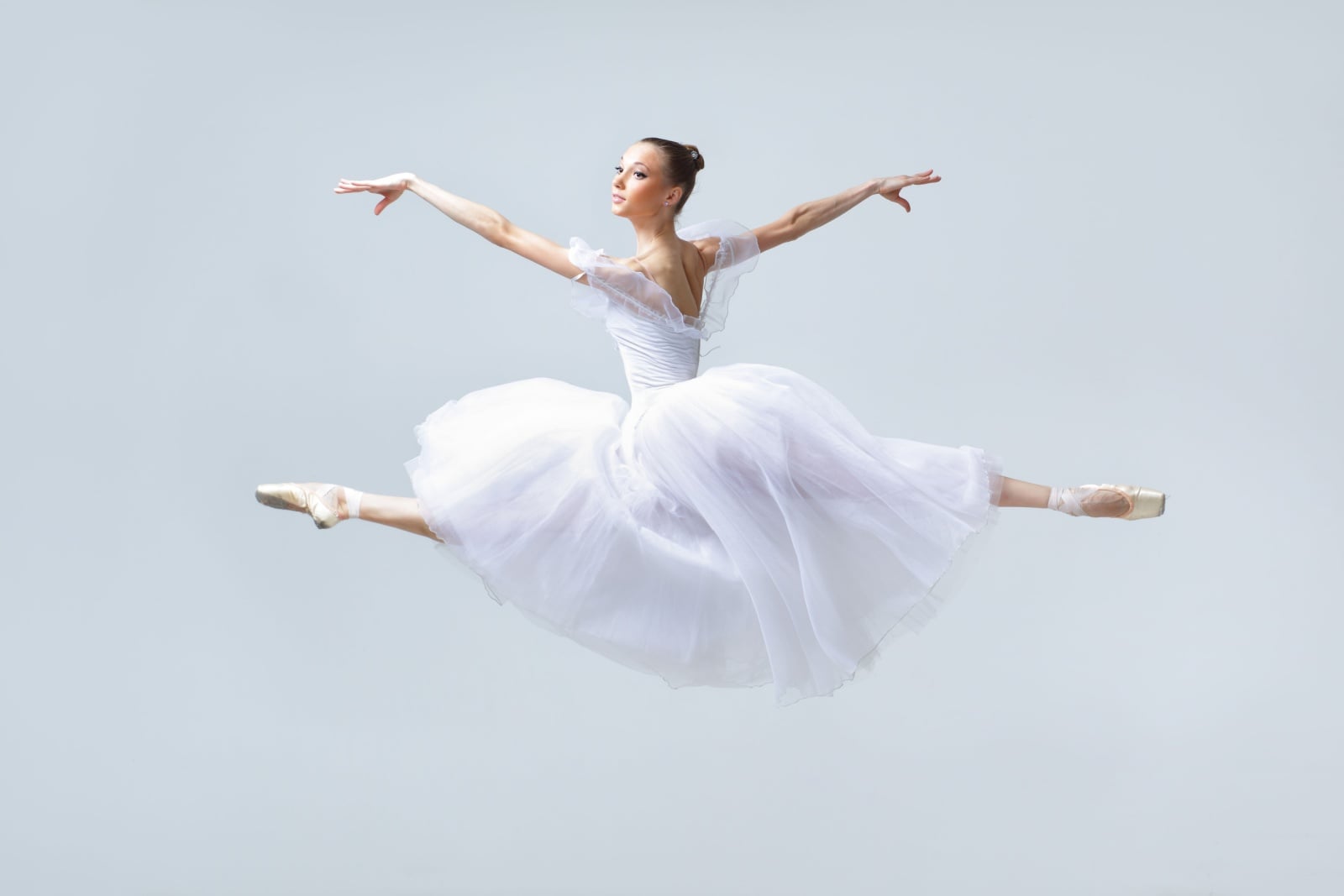
Grand Jeté: A large leap where one leg is thrown forward and the other backward in a split in the air
Jeté: A jump from one foot to the other where the working leg is thrown outward
Manège: A circular pattern of movement around the stage, often used in turns or big jumps to create visual momentum
Mazurka: A traditional Polish dance in triple time that’s sometimes included in classical ballets
Mime: A system of stylized gestures used to tell a story or express emotion without words
Neoclassical: A style of ballet that blends classical technique with more modern or abstract elements, often using faster tempos and less rigid storylines
Pas: The French word for “step,” used in compound terms like pas de chat or pas de bourrée
Pas de Bourrée: A quick sequence of steps usually performed as a transition
Pas de Chat: “Step of the cat,” a jump where both feet pass through retiré as the dancer moves to the other foot
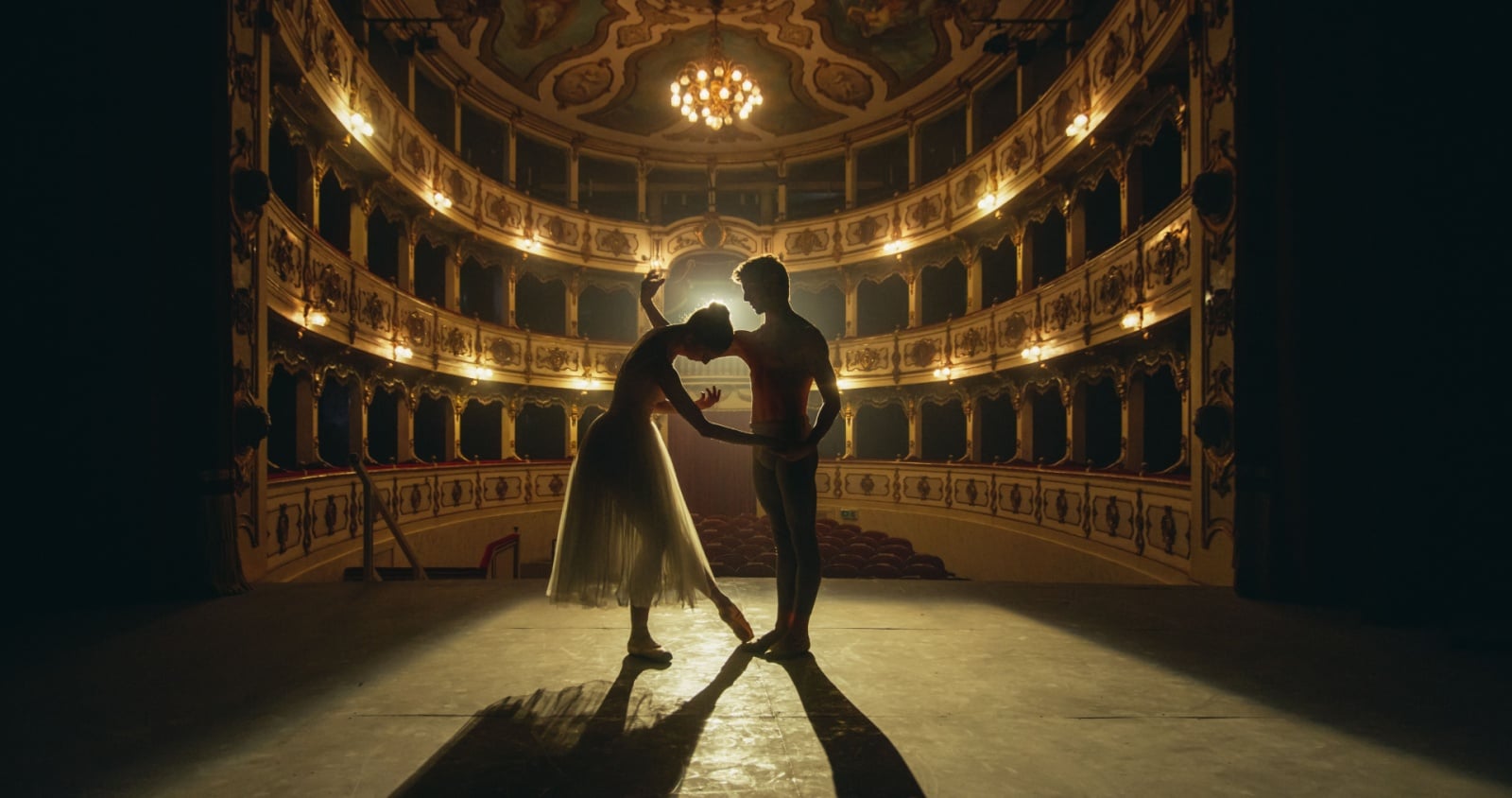
Pas de Deux: A dance for two people that includes lifts and synchronized movements
Penché: A tilt of the upper body forward while the working leg is extended upward, usually in arabesque
Petit Allegro: The section of a class or choreography that includes small, quick jumps requiring speed and precision
Piqué: A step where the dancer pricks the floor with a straight leg and steps onto it, typically en pointe or demi-pointe
Pirouette: A turn performed on one leg, either en dehors or en dedans
Plié: A bending of the knees, which can be either a demi-plié (half) or grand plié (full)
Port de Bras: Movement of the arms, often used to help express emotion and enhance technique

Promenade: A movement in which the dancer slowly pivots in place while holding a pose
Relevé: Rising onto the toes or demi-pointe after a plié
Retiré: A position where the working foot is placed at the knee of the standing leg
Révérence: A respectful bow or curtsy performed at the end of class or a performance to show gratitude
Rond de Jambe: A circular movement of the leg, either on the floor or in the air
Romantic Tutu: A soft, bell-shaped tutu that reaches mid-calf, used in ballets from the Romantic era like Giselle
Sauté: A jump that takes off and lands on the same foot or both feet
Sickle: A technical error where the dancer’s foot turns inward instead of maintaining a straight line
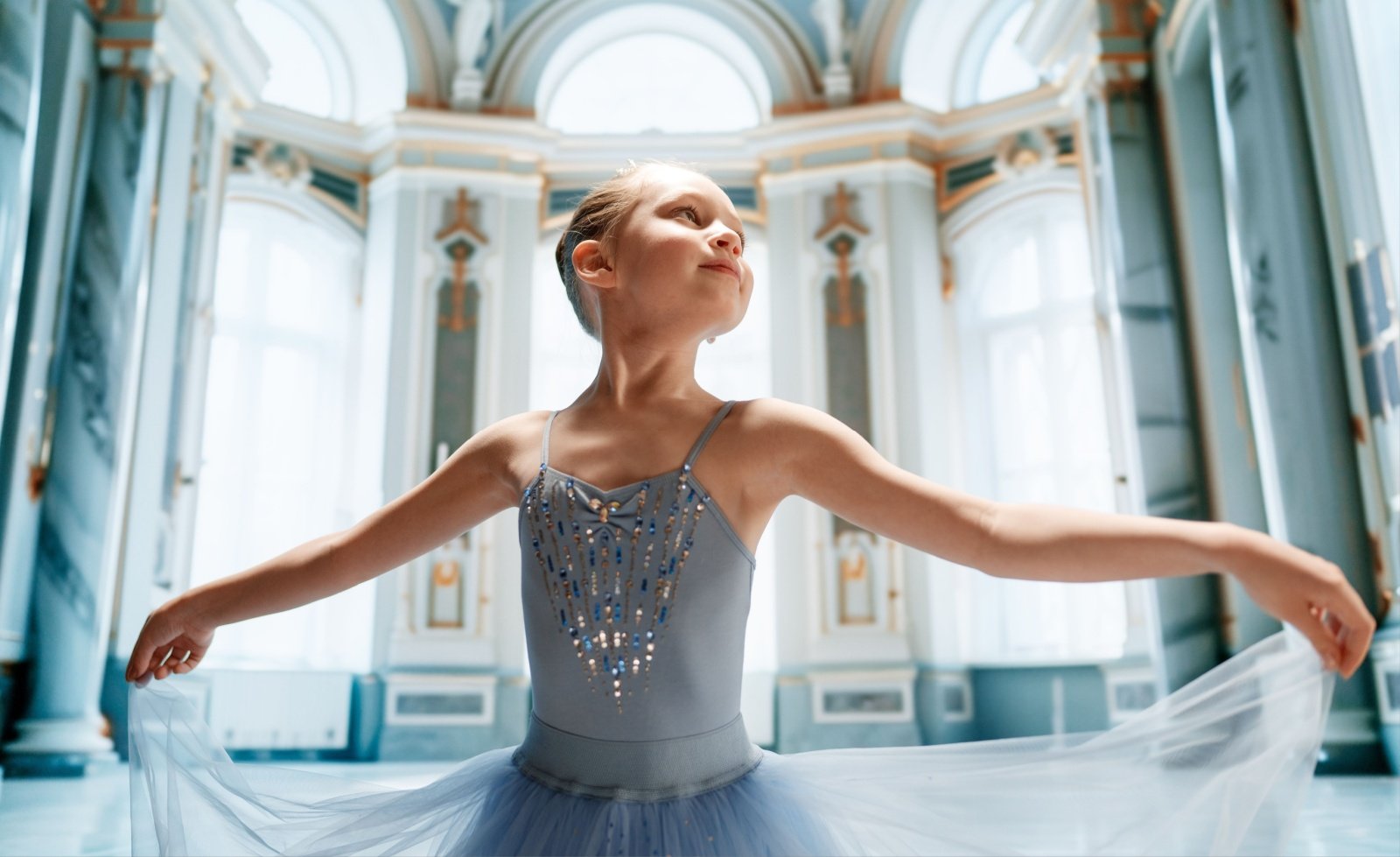
Sous-sus: A tight fifth position on relevé, where the feet appear as one from the audience’s perspective
Soutenu: A turning movement where the dancer pivots around while pulling the legs together
Spotting: A technique used during turns to help prevent dizziness and maintain direction by focusing on one spot
Temps Lié: A linking step that transfers weight smoothly from one foot to another
Tendu: Stretching the foot along the floor to a full point without lifting it
Tour en l’Air: A high jump with a full rotation in the air, usually performed by male dancers
Variation: A solo dance, often part of a larger ballet performance, used to showcase a dancer’s technique

Additional Resources
- Fundamentals of Ballet
- Ballet Basics: A Quick Guide to Understanding Ballet
- 26 Ballet Moves for Dancers of All Skill Levels
- Tips for Watching a Ballet
- Theater Seating
- Ballet Moves and Terms
- Basic Ballet Positions
- Home Theater Seats
- Ballet Terms, Positions, and Poses
- 21 Levels of Ballet: Easy to Complex
- Movie Theater Seating
- Ten Greatest Ballets of All Time
- Sectional Sofas for Home Theaters
- Seven Fundamental Movements of Ballet
Home Theater Seating