Reading and writing are really important because they help you talk to people, learn new things, and share your ideas. When you read, you can go on adventures, meet new people, and learn about different places and cultures. And when you write, you can tell your own stories, explain stuff, and share the ideas in your head with others. Learning about and getting better at reading and writing can actually be a lot of fun, too. You can read books you really like, play games with words, make up your own stories or poems, or even try fun quizzes. All of these things help you learn while having a good time!
Read along and listen to this Native American folktale to get better at reading and enjoy an interesting story.
Follow along as a real-life astronaut at the International Space Station reads this book about space travel.
Group A: Stories for Beginner Readers
This site has lots of videos that can help you learn more words and get better at things like counting and knowing your colors. As you get better at reading, you can move on to other groups of videos for more advanced students.
Follow along as actress Jennifer Garner reads this story about a girl who finds out that her best friend doesn’t have enough food to eat.
Read along with this interactive story and learn what it takes to become an inventor.
You can learn lots of things by playing memory matching games. In this version, you need to match up words, pictures of what those words describe, and definitions of words.

Test how many words you know by clicking on the right definition for each.
Play this game to practice putting together sentences correctly. The more sentences you put together, the more points you’ll earn.
Animals and Adjectives Cheese Quest Game
Practice using different adjectives to describe animals in this game, which combines grammar and vocabulary skills. Every right answer helps the mouse get more cheese!
Learn about how we can use words to compare things on this page, then play the game at the bottom to test what you’ve learned.
Turtle Diary: Practice With Periods
Here’s a group of games that will help you learn more about how to use punctuation in your writing.
Fun Factory Punctuation & Capitalization
In this game, you need to spot and fix the mistakes in a sentence. When you do, you’ll get a piece that you can use to put together a toy.
Beginner-Level English Grammar Quiz
Print out this quiz to test what you know about grammar, then check your answers with the answer key at the end to see how well you did.
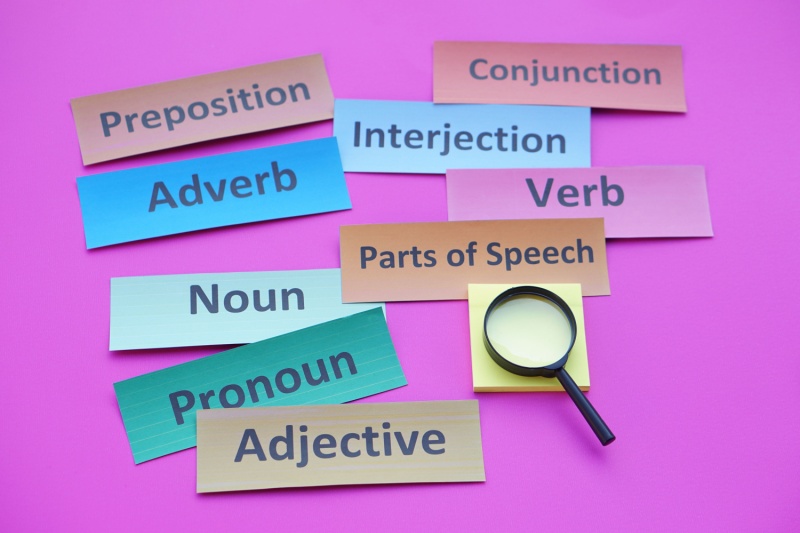
Regular and Irregular Plural Nouns
Sometimes, you can add an “S” to a word to make it plural, but sometimes, it’s not so simple. Practice making different words plural in this game, in which some of the words follow the rule and some of them don’t.
It can be easier to learn to spell when you can find patterns in different words. This document contains lists of spelling words that are grouped by a common feature, like words that contain “ch” or “ie.”
Here’s a plan for learning how to spell a bunch of words over the course of a school year. Work on a new list every week and you’ll be able to spell hundreds of words by the time you’re done!
Basic Spelling Vocabulary List for Different Grade Levels
This page has spelling lists for every grade from 1 to 5, including a total of 850 words. That’s a lot of words! But they’re all words that you’ll use a lot, and if you break it down into a few words every week, learning all of these words will be easier.
Help the frog cross the roads and rivers by spelling out the words you hear as you play.
WordHippo is an all-in-one resource for learning about words. You can search for words that rhyme, words that mean the same thing, and even words in different languages!
This neat tool can help you learn about what different words mean. Just search for a word and you’ll see a big web of words that are related to it somehow.

Here’s another tool you can use to find out how words relate to one another and understand their meanings better.
Have you ever found yourself trying to remember a word that you just can’t seem to come up with? Everyone has, but this tool has the solution. Just type in what the word means and it will help you find the word you’re looking for.
This site is an online dictionary that can also help you learn about where words come from and how they’re used.
Basic Vocabulary List for ESL Students
If English isn’t your first language, it can be extra-hard to get better at reading and writing. This page has a whole bunch of sections with different words and phrases that you’ll need to learn first.
Here’s a huge list of words that you should be able to learn the meanings of. Don’t panic, though: You don’t need to know every word here right away!
Academic Vocabulary Words for First-Graders
This is a list of vocabulary words that first-grade students should learn to help them get better at reading and writing.