
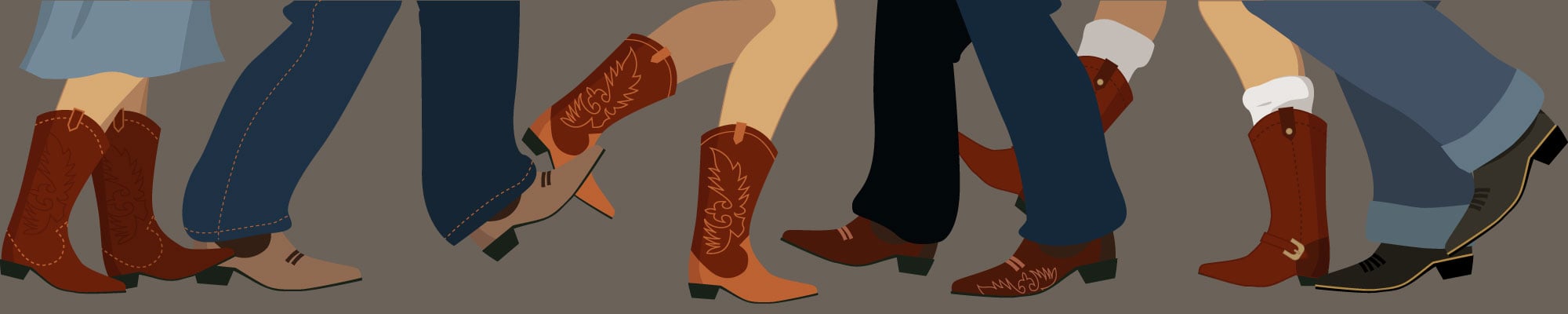
You have seen square dancing in movies before from your home theater chairs. Square dancing has been bringing people together for hundreds of years, and it’s still going strong today. Rooted in a blend of European traditions like English country dances and the French quadrille, along with African American call-and-response styles, it’s a uniquely American folk dance with a rich cultural history. The format is simple: four couples form a square, one on each side, and move together in response to a caller’s directions. But don’t let the simplicity fool you. Square dancing is a surprisingly effective workout that builds balance, keeps you moving without being too intense, and sharpens your mental agility. Listening to a caller and reacting in real time keeps your mind just as engaged as your feet.
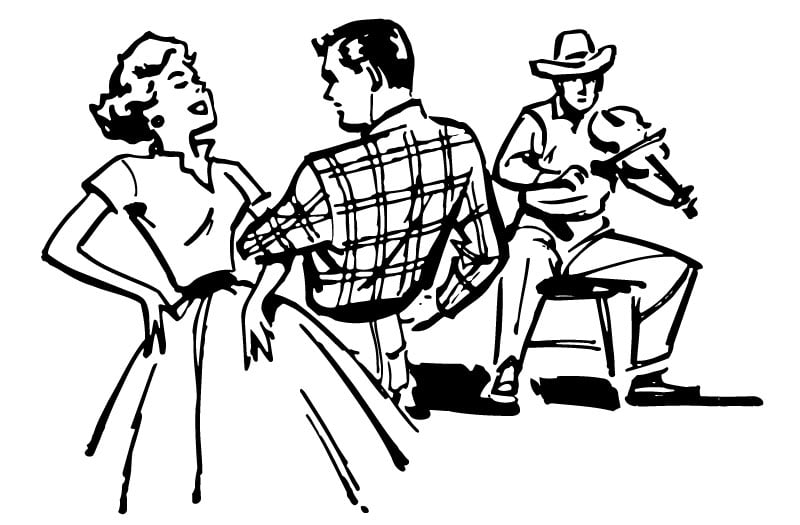
Traditional Square Dance vs. Modern Western Square Dance
Square dancing takes two main forms. Traditional square dance usually consists of simple, repetitive steps led by a caller, which makes it quite beginner-friendly, as you don’t need to know too much to be able to jump in and start dancing. Modern Western square dance uses a wider variety of steps in an unpredictable order. It also uses two different types of calls; a round of dancing will typically begin with a “hash call,” which is spoken rhythmically, and then segue into a “sung call,” which is sung to the music.

Variations and European Square Dancing
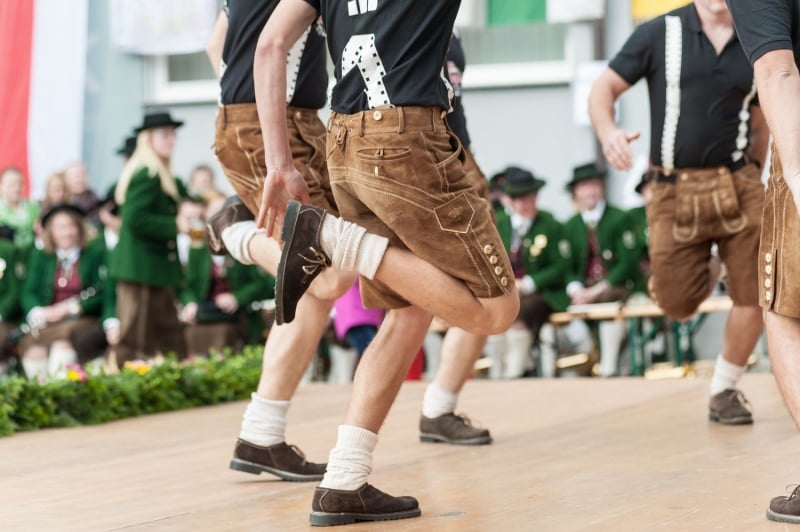
Other variations of square dancing also exist, alongside related but distinct dance forms like the contra dance, which is danced in two lines instead of a square. Many English country dances are danced in a square formation, as is the German dance called the Française, which is similar to the French quadrille but often has a faster tempo. The Dutch also have a square dance, known as the lancier; this dance includes jumps and hops, making it a more playful dance form. Scandinavians also dance in squares, such as in the Swedish hambo or the Norwegian halling.
Basic Square Dancing Calls
- Aside
- When a character delivers a comment directly to the audience.
- Beat
- A single-action component of spoken material.
- Blocking
- Directions for the movements of actors on stage.
- Central conflict
- The plot action that involves opposing forces between characters.
- Characterization
- The development of qualities and personality traits in their characters.
- Cheating
- Cheating involves positioning the body so it partly faces the other characters and partly angles out toward the camera or the theater seating area.
- Cold reading
- When actors read unfamiliar material they are cold reading.
- Composition
- The arrangement of staging and design element.
- Conflict
- Tension rises as characters have to overcome obstacles and struggles to reach objectives.
- Countering
- Actors move in reaction to other actors’ movements.
- Cue
- This action directive signals actors to move or speak.
- Dialogue
- The lines of a script that an actor speaks.

Glossary of Square Dancing Terms
- Caller
- The person who leads a square dance by giving instructions to the dancers.
- Corner
- The person next to you and standing perpendicular to you.
- Figure
- A specific set of movements.
- Head Couple
- A couple facing the caller or with their backs to the caller.
- Partner
- The person on the same side of the square as you.
- Sashay
- A sliding step to the side.
- Side Couple
- A couple facing perpendicular to the caller.
- Tip
- A round of square dancing.
Teaching Techniques and Tips for Adults
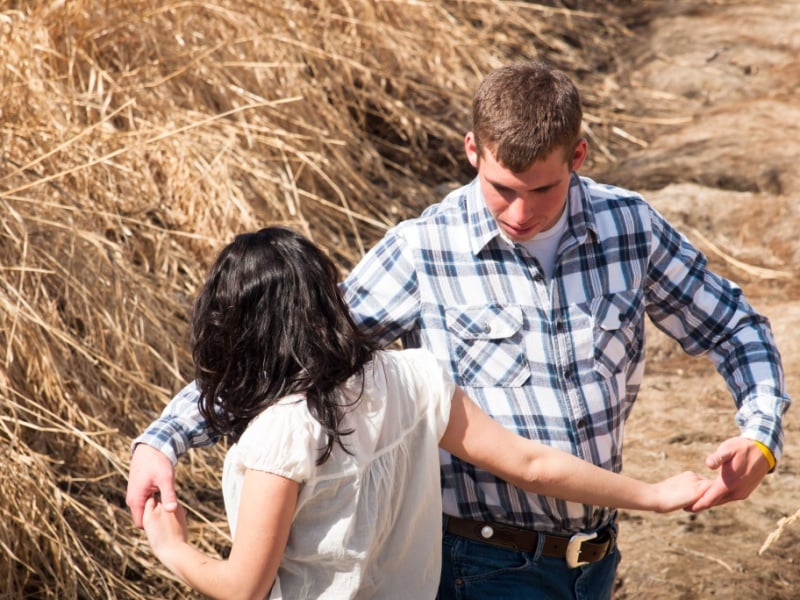
If you’re teaching square dancing to adults, it’s important to give clear instructions and be patient, letting their learning guide the pace of instruction. Begin with basic calls, demonstrating them without music and repeating them until each type of step is learned. Encourage questions to be sure that the lessons are clear. Once the students master some basic steps, you can start incorporating music. Ideally, the group of eight dancers in a square should have plenty of time for practice sessions, during which they can work on their skills while experiencing the social aspect of square dancing.
Teaching Techniques and Tips for Kids
Teaching kids to square dance can require some variations to keep them engaged as they learn. You may want to simplify things and make them more playful. For instance, you might explain grand right and left as a snake game, with two snakes slithering in and out, intertwining around the circle. When you’re teaching kids, use music right away, and pick songs that are upbeat and that the kids will enjoy listening to. This makes learning more fun, and it also gives them a beat to dance to that can help them learn the rhythms of the steps as they go. Be sure to praise their efforts as they make progress. You may even want to organize a performance or a group dance event to let them show off what they’ve learned.
Square Dancing Resources
- Square Dancing 101
- The Benefits of Square Dancing
- Top Ten Things You Didn’t Know About Square Dancing
- Square Dance Demonstration
- A Brief History of Square Dance
- Square Dance Instruction for Kids
- Square Dance Facts for Kids
- The History of Square Dance
- How to Square Dance: 12 Basic Calls
- The Health Benefits of Square Dancing