
Anyone can move to music or pick up a trending TikTok routine, but stepping into the world of dance reveals a whole language of its own. Every style comes with specialized terminology that describes what happens in the studio and on stage. Ballet, for example, is built almost entirely on French terms, which can feel intimidating at first. The good news is you don’t need to be fluent in another language to get started. Whether you’re training to perform, taking your first class, or simply want to better appreciate what you’re watching from the audience, learning a handful of key dance terms goes a long way toward deepening your understanding and enjoyment of the art form.
- Abstraction
- Choreography that is not intended to tell a story.
- Accumulation
- Choreography that successively adds movements to existing movements.
- Adagio
- Movements that are slow and fluid.
- Artistic Intent
- The main idea of a piece.
- Axial Movement
- Movement of the body while remaining in one place.
- Ball Change
- A quick transfer of body weight from one foot to the other.
- Ballet
- A classical dance style emphasizing elaborate gestures and graceful movement.

- Belly Dance
- A Middle Eastern dance style involving complex torso movements that require highly focused muscle control.
- Body Placement
- How all of the parts of the body are positioned and carried.
- Canon
- A section of a dance in which dancers perform the same set of movements at different times; the equivalent of a round in music.
- Choreographer
- The person who designs and plans all of the movements of a dance to create a complete work.
- Contemporary Dance
- A fluid style of dance that incorporates elements of modern dance, jazz dance, and ballet.
- Contraction
- Curving the spine forward.
- Contra Dance
- A folk dance performed by lines of couples.
- Counterpoint
- Two or more different pieces of choreography executed together.
- Critique
- A written analysis of a performance.
- Dance Style
- Dancing that uses a particular type of movement, arrangement of dancers, and/or style of music.
- Duple Meter
- Dance executed in a meter that’s divisible by two (either two beats per measure or a multiple of two, as in 4/4 or 2/2).
- Effort Economy
- Moving only the parts of the body that need to be moved.
- Energy
- The intensity and type of force used to execute a movement.
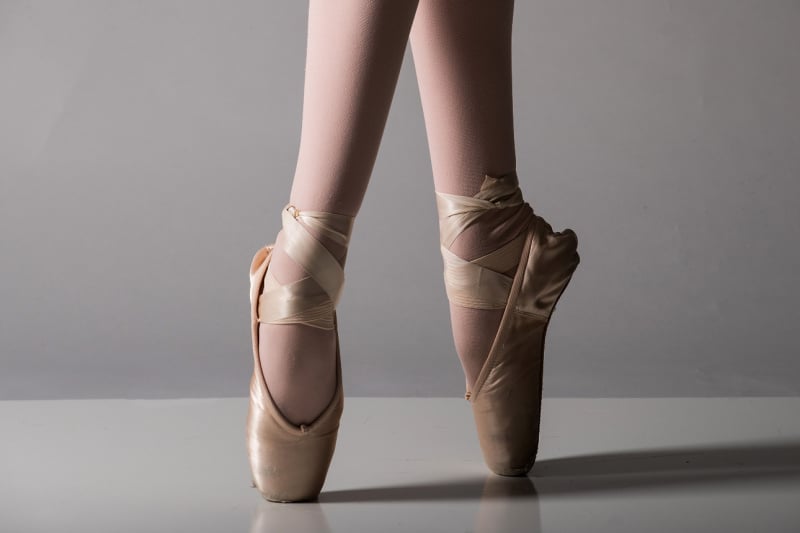
- En Pointe
- Dancing on the tips of the toes.
- Facings
- The directions in which dancers’ bodies face relative to other dancers or a part of the theater.
- Flamenco
- A Spanish dance style characterized by rhythmic stamping of the feet and broad, expressive arm movements.
- Folk Dance
- A traditional dance that’s part of the culture of a community.
- Gesture
- A movement that does not require the dancer to shift their body weight.
- Ground Bass
- A piece of choreography where a group executes simple moves in the background while a soloist performs more complex moves in front of them.
- Hip-Hop Dance
- A style of dance that’s usually performed to hip-hop music and includes breakdancing.
- Interpretation
- The meaning communicated by a dance.
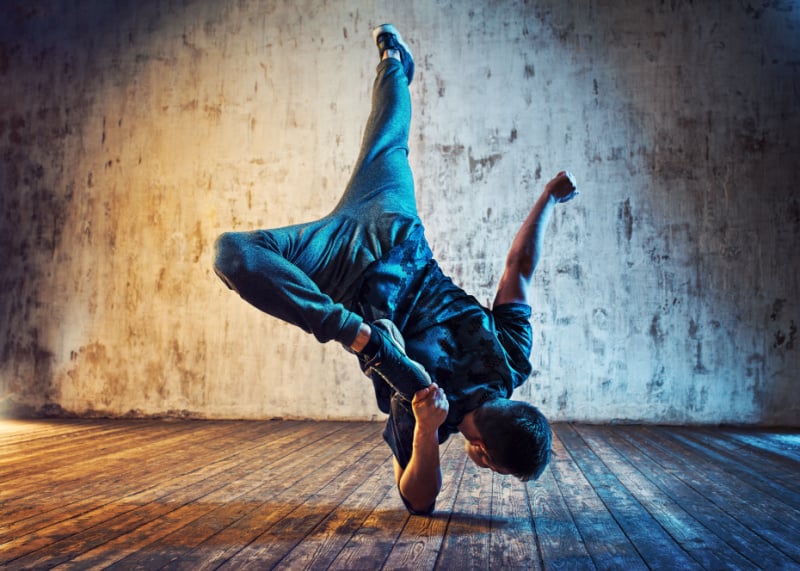
- Inversion
- A movement or set of movements executed upside down.
- Irish Dance
- A style of dance that involves rapid foot and leg movements and very little movement above the waist.
- Isolation
- A movement of a single part of the body.
- Jazz Dance
- An energetic dance style that includes intricate footwork, quick turns, and jumps.
- Jazz Hands
- Positioning both hands so that the fingers are splayed.
- Jump Shape
- The shape the body forms in the air during a jump.
- Kinesthetic Awareness
- A dancer’s awareness of the positions of their body and others’ bodies in space.
- Leitmotif
- A repeated movement or group of movements that helps to convey the theme of the dance.
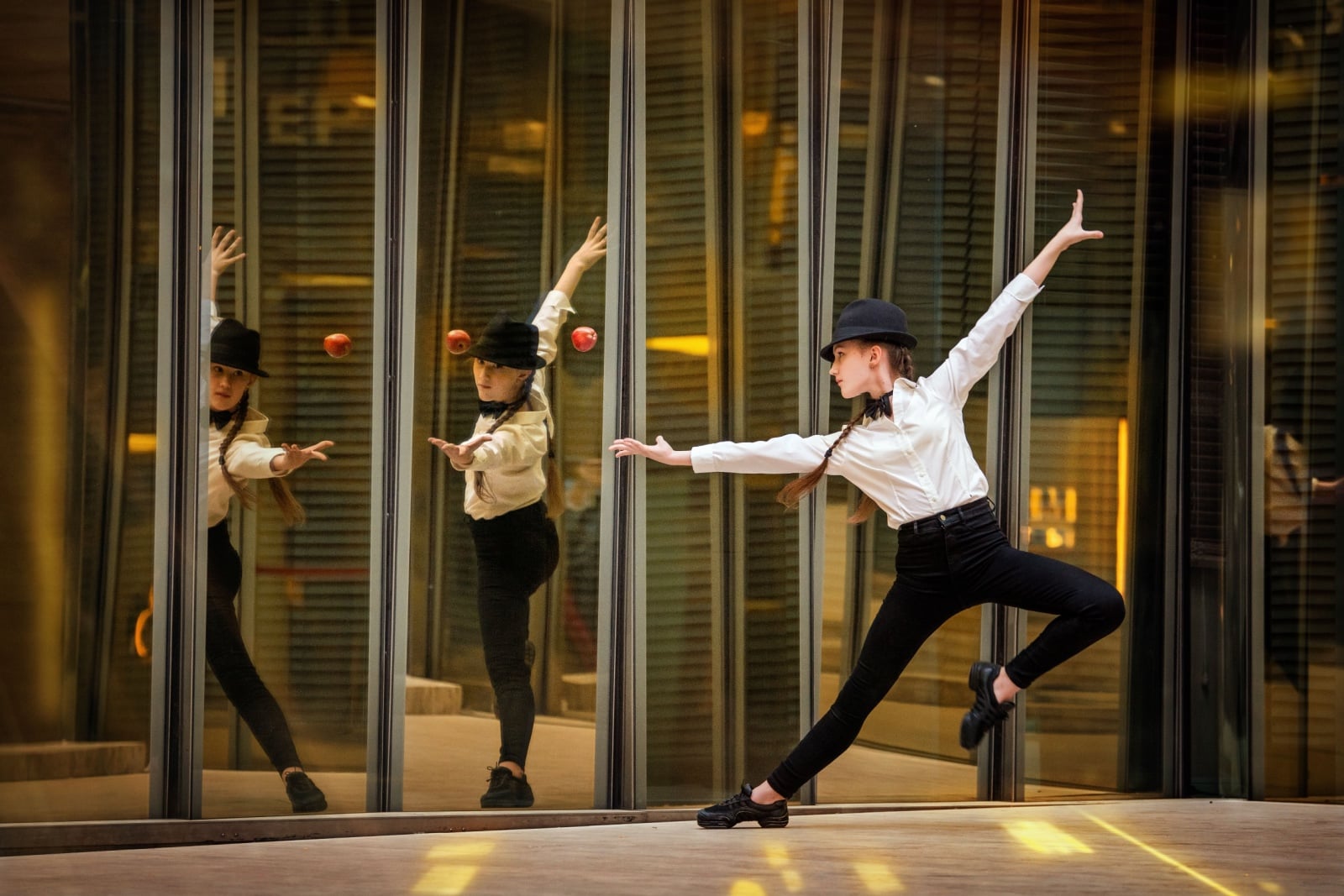
- Locomotor Movement
- Movement of the body from one place to another.
- Modern Dance
- An expressive style of dance that focuses on conveying intense emotions through body movements.
- Negative Space
- The empty space around the dancers.
- Pas de Deux
- A duet.
- Pathway
- The path that a dancer takes to get from one spot on the stage to another.
- Retrograde
- A piece of choreography executed in reverse.
- Rondo
- A piece of choreography that contains one repeated section alternated between at least three different sections (i.e., ABACADA).
- Score
- A written document describing the movements of a dance.
- Tap Dance
- A dance style focused on footwork that creates an audible rhythm made by the clicking of the dancers’ heels and toes on the ground.
- Tempo
- How fast or slow the music is in beats per minute.
- Theme
- The dominant idea conveyed by a piece of choreography.
- Triple Meter
- Dance executed in a meter that’s divisible by three (either three beats per measure or a multiple of three, as in 3/4 or 3/2).
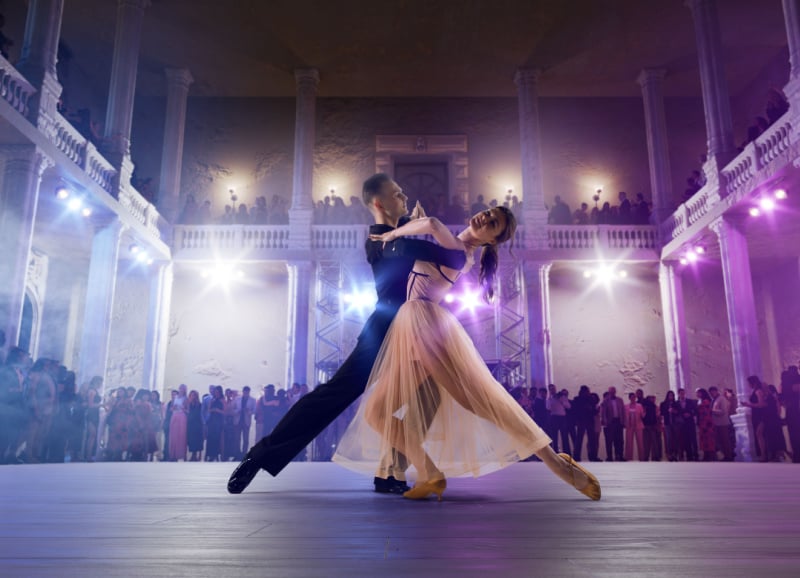
- Waltz
- A ballroom dance in triple meter.
Additional Resources
Key Questions
Why does dance use so many foreign terms, especially French ones?
+
Ballet in particular has a long tradition of describing movements using French terminology, which has carried over into the broader dance world. Learning a handful of these terms goes a long way toward understanding what you see on stage or hear in the studio.
What is the difference between axial movement and locomotor movement in dance?
+
Axial movement refers to movement that stays in one place, such as bending or twisting without traveling. Locomotor movement involves the body traveling from one spot on the stage to another.
What does a choreographer do?
+
A choreographer designs and plans all of the movements of a dance to create a complete, unified work. They determine not just individual steps but how those movements combine to express a theme or artistic intent.
What are some common dance styles and how do they differ?
+
Ballet emphasizes elaborate, graceful gestures; jazz dance features energetic footwork and quick turns; tap dance creates audible rhythm through heel and toe clicks; and modern dance focuses on conveying intense emotion through expressive body movement. Contemporary dance blends elements of several of these styles together.
What is a canon in dance?
+
A canon is a section of choreography in which dancers perform the same set of movements at staggered times, similar to a musical round. It creates a ripple or wave effect across the group of performers.
What is the difference between duple meter and triple meter in dance?
+
Duple meter is dance performed to music with a beat count divisible by two, such as 4/4 time, while triple meter is set to music divisible by three, such as 3/4 time. The waltz is a well-known example of a dance performed in triple meter.
What does "en pointe" mean in dance?
+
En pointe refers to dancing on the very tips of the toes, a technique most associated with classical ballet. It requires specialized footwear and significant training to execute safely.
Why does dance use so many foreign terms, especially French ones?
+
Ballet in particular has a long tradition of describing movements using French terminology, which has carried over into the broader dance world. Learning a handful of these terms goes a long way toward understanding what you see on stage or hear in the studio.
What is the difference between axial movement and locomotor movement in dance?
+
Axial movement refers to movement that stays in one place, such as bending or twisting without traveling. Locomotor movement involves the body traveling from one spot on the stage to another.
What does a choreographer do?
+
A choreographer designs and plans all of the movements of a dance to create a complete, unified work. They determine not just individual steps but how those movements combine to express a theme or artistic intent.
What are some common dance styles and how do they differ?
+
Ballet emphasizes elaborate, graceful gestures; jazz dance features energetic footwork and quick turns; tap dance creates audible rhythm through heel and toe clicks; and modern dance focuses on conveying intense emotion through expressive body movement. Contemporary dance blends elements of several of these styles together.
What is a canon in dance?
+
A canon is a section of choreography in which dancers perform the same set of movements at staggered times, similar to a musical round. It creates a ripple or wave effect across the group of performers.
What is the difference between duple meter and triple meter in dance?
+
Duple meter is dance performed to music with a beat count divisible by two, such as 4/4 time, while triple meter is set to music divisible by three, such as 3/4 time. The waltz is a well-known example of a dance performed in triple meter.
What does "en pointe" mean in dance?
+
En pointe refers to dancing on the very tips of the toes, a technique most associated with classical ballet. It requires specialized footwear and significant training to execute safely.